Hey everyone, and welcome back to the behind-the-scenes of our little paper cup factory! If you’ve ever stood in the checkout line at a café, grabbed a coffee on your way to work, or taken a sip of water from a cup at a party, you’ve probably wondered: do paper cups actually come in different sizes? Spoiler alert—they don’t just come in one “standard” size, and as a paper cup supplier, I’m here to break down why that matters, how we do it, and the random little details no one talks about until they need to. Paper Cup

Let’s start with the most basic question because I get this at least twice a week from new clients and even my cousin who runs a small bakery: what are the actual sizes? If you’ve ever bought a small coffee and thought, “Wait, this is way smaller than the last café I went to,” that’s not your imagination. Most places in the US (where we’re based, for context) use the “fluid ounce” measurement, but it’s not just random numbers. The go-to standard sizes for single-use paper cups are 8oz, 12oz, 16oz, and 20oz for hot drinks, and then we have larger ones for cold stuff like 24oz, 32oz, even 44oz for those big slushies or fountain drinks at the amusement park. But hold up—this isn’t some universal rule. In Europe, they use milliliters, so a “small” coffee might be 250ml, medium 350ml, large 500ml, which translates roughly to 8oz, 12oz, 16oz. It’s not just a unit switch—brands actually tweak sizes slightly to fit their customer base. For example, a local coffee shop in Brooklyn might use 10oz for their “signature small” because their customers prefer a stronger, smaller pour, while a gas station in Texas goes straight to 20oz as their medium because people want more to go on long drives.
Now, why do we have so many sizes, anyway? It’s not just to make us order more (though let’s be real, that’s a bonus for businesses). Let’s think about use cases, because that’s where most of the size differences come from. Hot drinks first: 8oz is perfect for espresso, lattes that are more shots than foam, or kids’ hot cocoa. It’s small enough to hold in one hand, fits in car cup holders, and doesn’t get too hot to grip for long. Then 12oz is the workhorse—this is your standard drip coffee, the latte you get from chain cafes, the hot chocolate at the movie theater. 16oz is for people who want a bigger pick-me-up, maybe a large coffee with extra room for cream. For cold drinks, it’s a different game because ice takes up space. A 16oz cold cup, for example, actually holds about 12oz of liquid if you fill it to the top with ice—so we have to account for that when designing sizes. That’s why you’ll see cold cups listed as “nominal” sizes too, not just the exact liquid capacity. A 24oz cold cup is enough for a big soda, a 32oz is the iconic “big gulp” size that everyone in the US recognizes, and 44oz is basically a drink you could share… though I’ve definitely finished one alone on a hot day.
Here’s a part most people don’t realize: as a supplier, we don’t just make the sizes that already exist. A lot of our clients come to us because their current cup size isn’t working for them, so we have to adjust. Last year, a specialty tea brand reached out saying their original 12oz cup was too small for their boba drinks—people were complaining they didn’t get enough tapioca. So we worked with them to design a 16oz hot cup that’s slightly wider at the bottom to fit more toppings, but still fits under their existing espresso machine’s steam wand (that was the tricky part—couldn’t make it so wide it wouldn’t fit). Another client: a kids’ pizza place that wanted smaller 6oz cups for side cups of lemonade, so they wouldn’t waste half the drink. We tested different rim sizes, made sure they stacked easily for storage, and got it right in about two months. That’s the thing about being a paper cup supplier—we’re not just selling a pre-made product, we’re problem-solving with sizes every single day.
Wait, can we talk about the “odd” sizes that aren’t on the standard list? Yeah, those exist too, and they’re the ones that show how flexible the industry is. I had a wedding planner come to us last month wanting 10oz cups that were shaped like tiny champagne flutes—no, not flimsy plastic, paper, that wouldn’t collapse when filled with sparkling cider. We had to adjust the taper of the cup, make the base a little wider so it didn’t tip over, and keep the rim thick enough to feel like a “fancy” cup even though it’s paper. Then there’s the 7oz cups for airline drinks—super specific, fits in the tray table, not too big to waste on a short flight. Even the fast food industry uses custom sizes sometimes: McDonald’s (don’t quote me on the exact numbers, but you know the ones) has their own sizes that are slightly different from Starbucks, which is why if you bring a Starbucks cup to a McDonald’s soda machine, it doesn’t fit. That’s not a mistake—companies patent their cup shapes and sizes to keep consistency, so customers know exactly what to expect.
Now, let’s get into the science part, because I know some of you are wondering if size is just about how much liquid it holds, or if there’s more to it. Spoiler: there’s a lot more. The thickness of the paper, the coating inside, the rim design—all tie into size. For hot cups, we use a thicker paper (usually 16pt to 20pt) because they need to insulate, and if we made a 20oz hot cup too thin, it would get too hot to hold. For cold cups, we use a polyethylene (PE) coating or a plant-based coating to prevent leaks, and the size’s height and diameter affect how much condensation forms. A taller, narrower cold cup will have less surface area than a short, wide one, so it drips less on your hand. That’s why most iced coffee cups are tall and narrow—they’re designed to cut down on mess, not just hold more liquid. As a supplier, we have to calculate all that when we adjust sizes: if we widen a cup by an inch, does it still fit in standard car cup holders? If we make it half an ounce bigger, will it cost more for the client, so do we need to adjust the price per unit?
I get it, some people just want a simple answer: “yes, paper cups come in different sizes, here are the numbers.” But that’s boring, and it ignores all the work that goes into making sure a cup works for your specific needs. Last quarter, we had a small coffee roaster come to us saying they were using 12oz cups, but their customers were asking for a smaller “pour-over” cup that’s easier to hold while walking around a farmers market. They didn’t want to switch to a completely different brand, so we created a custom 10oz cup with a thicker, curved rim that’s comfortable to grip even when it’s hot, and fits in their existing lids. The client said sales went up 15% after they launched the new cup, because people loved not having to carry a bulky 12oz cup while browsing stalls. That’s the kind of thing that makes our job worth it—helping small businesses grow by solving a problem they didn’t even realize they had.
Wait, let’s address the elephant in the room: have cup sizes gotten bigger over time? Yeah, probably. If you look at old photos from the 1980s, a “large” coffee was 16oz, now a large is often 20 or 24oz. That’s partly because of portion control for brands, partly because consumers expect more, and partly because of inflation—people want to feel like they’re getting more for their money. But there’s a pushback too, right? More places are offering smaller sizes, or even “mini” drinks, as people become more aware of portion sizes. We’ve had clients come to us recently asking for 8oz and 10oz sizes specifically because their customers are looking to cut back on sugar, so they want a smaller soda or a smaller latte. That’s a shift I love seeing—going back to more reasonable sizes instead of supersizing everything.
Now, let’s talk about how you know which size is right for you, if you’re a business owner or just someone who buys cups for a party. First, think about the drink and the occasion. Hot espresso? 8oz. Drip coffee for a morning rush? 12oz. Big coffee for a long commute? 16oz. Iced tea or soda? 20oz or 24oz. For parties, if you’re serving punch, go with a larger 32oz cup because people tend to fill those up. If you’re serving kids, 6oz or 8oz is perfect so they don’t spill half the drink. And always check: does the size fit your lids? There’s nothing worse than ordering 20oz cups and realizing your 16oz lids don’t fit. As a supplier, we always send samples first, so clients can test that before placing a big order. It’s part of our process, and it’s why people come back to us.
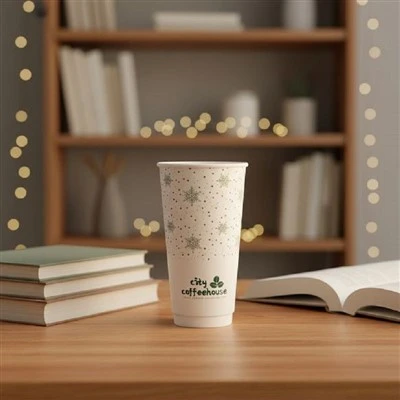
At the end of the day, the next time you grab a paper cup, whether it’s a small coffee on your way to work or a big slushie on a summer day, remember: that size isn’t random. It’s designed for a specific purpose, tested for grip and fit, and often customized to fit the brand that’s serving you. And if you’re a business looking for the right paper cup size for your needs—whether you need a standard size, a custom shape, something eco-friendly, or all of the above—hit us up. We’re here to help you figure it out, no jargon, no pressure, just good old-fashioned paper cup solutions that work for you.
Single Wall Paper Cup References:
- Single-Use Foodservice Packaging Association. (2023). Standard Sizing Guidelines for Paper Cups and Lids.
- European Packaging and Labeling Association. (2022). Metric Sizing Standards for Disposable Beverage Containers.
- National Coffee Association. (2021). Consumer Trends in Beverage Container Sizes and Preferences.
Wuhan Xinyongan Industry and Trade Co., Ltd.
Wuhan Xinyongan Industry and Trade Co., Ltd. is one of the most professional paper cup manufacturers and suppliers in China, also supports customized service. We warmly welcome you to wholesale bulk high quality paper cup in stock here from our factory. If you have any enquiry about pricelist, please feel free to email us.
Address: No. 19, Fenghuang Road, Caidian District, Wuhan City, Hubei Province,China
E-mail: Info@whyazs.com
WebSite: https://www.ipackpartner.com/
