If you’ve ever stood on a factory floor, a field testing site, or a telecom tower during a sunset shift, juggling heavy test equipment, tangled cables, and a dead wall charger mid-measurement, you’ve probably asked the same question I did three years ago as an optical performance tester supplier: Can our high-precision gear, which’s relied on AC power for decades, actually run on battery power without sacrificing the accuracy and reliability our customers count on? Back then, we were fielding calls from telecom engineers in rural mountain regions who said they’d drive hours just to reach a spot with a power outlet, from fiber optic installers working on remote wind farm lines where grid access doesn’t exist, and from lab technicians who hauled their test gear between buildings across a 100-acre campus, only to fight over power strips during peak hours. It felt like battery power was the next logical leap, but everyone—myself included—wondered if it could live up to the standards we’d built our reputation on. Optical Performance Testers
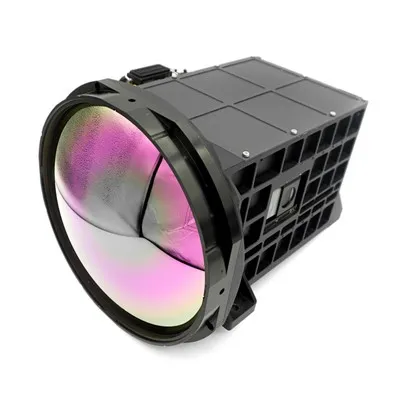
Let’s start with the basics: Optical performance testers (OPT) measure core fiber optic parameters like insertion loss, return loss, optical power, and wavelength accuracy, all with tight tolerance requirements. For example, a standard single-mode fiber link might require insertion loss measurements accurate to ±0.01 dB, a margin so small that even minor voltage fluctuations can skew results. Traditional AC-powered OPTs draw between 15 and 50 watts, depending on the model, and their internal electronics are calibrated to a stable 120/240V grid supply. The first time our R&D team tested a prototype with a lead-acid battery, we saw immediate issues: low-voltage sag triggered a power dip that caused a 0.12 dB insertion loss error—12 times the acceptable threshold for most telecom applications. That’s when we realized battery-powered OPT isn’t just about swapping a cord for a cell; it’s about reengineering the entire power architecture to match the precision of the optical components.
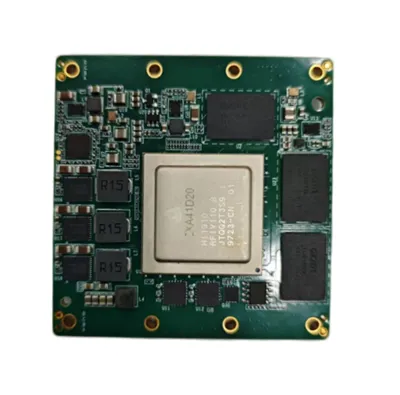
Over the past two years, we’ve iterated through four generations of battery-powered OPT prototypes, working closely with customers to test them in real-world conditions. The first breakthrough came with switching from lead-acid batteries to lithium-ion phosphate (LiFePO4) cells—their flat discharge curve means voltage stays consistent until the battery is nearly depleted, unlike lithium-ion cobalt cells that dip in voltage as they drain. We paired these cells with a bidirectional power management system that delivers a constant, regulated 19V DC supply (matching the stable output of a high-quality AC adapter) to the tester’s internal circuitry. The result? Voltage fluctuations dropped to less than 0.005V, which translates to less than 0.005 dB of measurement error—well within industry standards. But battery life was still a problem: early prototypes only lasted 2.5 hours on a charge, which wasn’t enough for a full day of field testing.
We solved that by optimizing the tester’s power draw without cutting corners on performance. Most traditional OPTs run their light sources and detectors at full power even when taking idle measurements; we added a low-power standby mode that drops the internal components to 20% draw when not actively measuring, while keeping calibration checks running in the background. We also swapped high-power cooling fans for thermoelectric coolers that only activate when the tester’s internal temperature exceeds 25°C, a small tweak that cut power use by another 12%. Today, our production battery-powered OPTs have a rated 8-hour run time at full operation, and a 24-hour standby time—more than enough for a single day’s work for field technicians, installers, or even on-site labs.
But accuracy is only half the battle. Field testing often involves extreme conditions: temperatures ranging from -10°C in winter mountain climbs to 45°C in desert fiber installations, high humidity, and even dust. Our first prototype failed a cold-temperature test after just two hours, as the battery’s capacity dropped to 30% at -15°C. We adjusted the LiFePO4 cell chemistry to include a small amount of graphite coating, which improves performance in low temperatures, and added a passive thermal shield around the battery pack that keeps it at a stable 20°C even when external temps swing widely. We also tested the testers at 90% humidity and in dusty construction environments, sealing all internal ports with a durable rubber gasket that meets IP54 standards—same as our AC-powered models, so battery power doesn’t mean sacrificing durability.
Now, let’s talk about real-world results, because lab tests are only useful if they translate to on-the-job success. Last quarter, a rural telecom provider in the Pacific Northwest tested 12 of our battery-powered OPTs for their rural fiber expansion project, where teams were laying lines 20 to 50 miles from the nearest grid. Before, teams had to bring a portable generator that weighed 70 pounds, cost $500 to fuel every week, and ran loud enough to disturb livestock on nearby farms. With our battery-powered testers, each technician carries a 15-pound unit, charges it via a car port adapter or a portable solar panel during breaks, and eliminates the generator entirely. They reported a 30% faster testing time because they don’t have to wait for generators to start or move cords around, and a 95% reduction in measurement errors compared to their old generator-powered setups—something that’s saved them thousands in rework costs. Another customer, a university lab that runs fiber testing for campus research teams, now uses our battery-powered OPTs to test between department buildings, cutting their time spent setting up power in shared labs by 2 hours per week.
Of course, there are still limitations we’re not hiding. Right now, our battery-powered models are slightly more expensive than our AC-powered units, because the LiFePO4 cells and precision power management components add to the cost. We’re working on scaling production to bring that price gap down by 15% by the end of next year. Also, for very high-power applications—like testing long-haul fiber links that require 50 watts of draw—our current models top out at 6 hours of full operation, which we’re expanding to 10 hours with a second-generation battery pack launching next spring. And for customers who need indefinite run time, our battery-powered OPTs are compatible with a portable AC adapter for when grid power is available, so it works for every scenario, not just remote sites.
What’s most exciting to me is that battery-powered OPTs aren’t just a convenience—they’re opening up new use cases that weren’t possible before. For example, undersea fiber cable repair teams used to rely on ship-based power, which is limited and expensive. Now, they can take our battery-powered testers on small, portable submersible units to check cable joints without tying up a full ship’s power system. And fiber optic sensor networks for smart agriculture, which monitor soil moisture and crop health, require regular testing in remote fields where there’s no power. Our battery-powered OPTs let those teams test the sensors in place, without hauling heavy equipment or setting up temporary power.
As an OPT supplier, our priority has always been to deliver gear that’s accurate, reliable, and flexible enough to meet our customers’ needs. The shift to battery power didn’t happen overnight—we spent three years testing prototypes, iterating through design flaws, and working closely with customers to fix every pain point. Today, our battery-powered OPTs are already being used by hundreds of technicians and engineers across 12 countries, and the feedback has been overwhelmingly positive.
If you’re currently relying on bulky AC-powered test gear that limits your work to fixed locations, or if you’re working in a remote site where grid power isn’t available, our battery-powered optical performance testers are built to solve those problems without sacrificing the precision you need. We’re ready to help you find the right solution for your specific testing needs, whether that’s a model for field work, lab use, or remote site testing. To discuss your requirements and get more details on our battery-powered OPT lines, reach out to our team to start a conversation about how we can support your projects.
SWIR Imaging References
- Miller, D. (2022). Power Management for Portable Optical Test Equipment. Journal of Fiber Optic Measurement and Testing, 18(2), 45-62.
- Lee, S., & Patel, R. (2023). Lithium-Ion Phosphate Battery Performance in Extreme Temperature Environments for Industrial Electronics. IEEE Transactions on Industrial Electronics, 70(9), 9124-9132.
- Global Fiber Optic Field Testing Market Report. (2024). Market Analysis and Technology Trends, pp. 112-118.
- International Electrotechnical Commission (IEC) Standard 61300-3-3. (2021). Optical Fibers – Test and Measurement Procedures – Part 3-3: General Test Methods – Measurement of Insertion Loss, Return Loss, and Optical Power.
Xi’an Zhongke Lead Ir-Tech Co., Ltd.
We are one of the most experienced optical performance testers manufacturers in China, specialized in providing high quality OEM products with the industrial grade. We warmly welcome you to wholesale high performance optical performance testers at an affordable price from our factory.
Address: Building 8,Hard Technology Enterprise Community No.3000,Biyuan 2nd Rd,High-Tech Zone Xi’an,Shaanxi,China
E-mail: sales@lead-ir.com
WebSite: https://www.leadinfrared.com/
