If you’ve ever worked with electrical components or sourced parts for devices, you’ve probably stared at a stack of SA Standard Plug Pins at some point. Maybe you needed them for a custom charging cable, a niche industrial appliance, or a small batch of consumer electronics, and thought—can these things even be changed? As someone who’s been supplying SA Standard Plug Pins for over 7 years, I get this question every single week, and the short answer is: yeah, most of the time, you can customize them. But there’s a lot of fine print that people don’t catch until they’re halfway through a prototype run and realize their “simple tweak” is actually a big headache. Let me break this down like I would to a regular guy in a startup workshop, not a corporate engineer who talks in jargon no one understands. Sa Standard Plug Pin
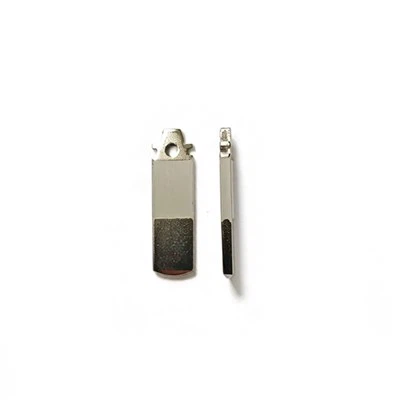
First, let’s get the basics out of the way for anyone who isn’t super deep in plug pin specs. SA Standard Plug Pins (that’s the South African standard, right? SANS 164-1, for anyone who’s curious) are those round brass pins—usually 4mm in diameter, a set length, with a specific spacing between them—used for most household and light industrial plugs in South Africa and neighboring countries like Namibia, Botswana, and Lesotho. The original spec was set back in the 1990s to standardize safety, so no one was mixing up pin sizes and frying circuits left and right. But as manufacturing got more flexible and people built everything from solar inverters for remote farms to custom audio cables, the one-size-fits-all pin started feeling restrictive. That’s where customization comes in.
Now, what do people actually ask for when they say “customize”? Last month, a guy from a Cape Town-based outdoor gear company hit me up. He needed pins a half-millimeter shorter than the standard 19mm because his new solar charger’s plug housing was tiny—any longer, and it wouldn’t fit. A couple months before that, a startup in Johannesburg wanted their pins plated with 24k gold instead of the standard tin-nickel because they were building a high-end portable speaker, and gold plating reduces signal loss for the Bluetooth connection. Then there was the guy who needed non-magnetic pins for a medical device his team was building—standard brass has a tiny magnetic pull, and that was messing with the device’s internal sensors. All of these are doable, but not all of them are as easy as just tweaking a number in a CAD file.
Let’s start with the most common customization request: size. Most people want to adjust the length, diameter, or even the tip shape of the pin. Here’s the thing about SA Standard Plug Pins—they’re not just random metal sticks. The original spec has specific tolerances for a reason. If you make the pin too short, it won’t make a solid connection inside the plug, which leads to arcing, overheating, and even fires. If you make it too long, it might poke through the other side of the plug and create a safety hazard. Same with diameter: the standard 4mm is calibrated to fit perfectly into the standard 4mm sockets used in SA plugs. If you go to 4.1mm, it might not insert at all, or it could scratch the socket over time and cause damage. The good news is, minor tweaks—like adjusting length by 0.5-1mm or diameter by 0.1mm—are totally doable. We just adjust our stamping and machining tools, and we can get a test run out in 1-2 weeks, no problem. The harder part is when someone wants something way off-spec, like a 5mm diameter pin. That’s not impossible, but it usually means we have to retool the entire stamping line, which adds cost and lead time. We had a guy once who wanted 3.5mm pins for a weird custom adapter—cost him 3x the standard price, and the lead time was 8 weeks. He still went through with it, but that’s the kind of tradeoff no one tells you about upfront.
Next up: material and plating. This is where a lot of my customers get surprised. The standard pin is made of brass (cheap, durable, conductive) and plated with tin-nickel (resists corrosion, easy to solder). But if you need something different, we can work with copper, bronze, even stainless steel. Plating is super flexible too—gold, silver, nickel, chrome, even custom colored plating for marketing stuff (like if you want bright red pins for a limited-edition phone charger). The only catch here is functionality. For example, gold plating is great for signal-heavy applications, but it’s way softer than tin-nickel, so it wears out faster. If you’re building a plug that’s going to be plugged and unplugged 1000 times a day, gold plating might not be the best choice long-term. We had a customer who went with gold for a luxury speaker, but after 6 months of testing, he switched back to tin-nickel because the pins were wearing out and causing connection issues. Also, some materials have to meet safety standards. If you’re selling plugs for household use in SA, the plating has to be ROHS compliant, and the material can’t have any toxic metals that would be banned. We had a customer once who tried to source cheap pins with leaded plating for a big order—we had to turn it down, because if those plugs hit the market, it would get them in huge trouble with the SABS (South African Bureau of Standards). Customization doesn’t mean cutting corners, that’s a rule I never break.
Then there are the less obvious customizations: like the shape of the pin head, or adding a notch for soldering, or even engraving a logo on the pin. Those are all doable, but again, it depends on the order volume. If you want 1000 pins with a tiny notch to make soldering easier, that’s easy—we just add a second machining step, no problem. But if you want 10,000 pins with a custom logo engraved, that requires a custom stamping die, which costs a couple thousand rand up front. That’s why most small startups stick to minor customizations for their first run—save the logo engraving for when they have bigger orders.
Wait, but let’s talk about the stuff that people think they can customize, but actually can’t. There’s a common myth that you can mess with the spacing between the two pins of a standard plug. That’s non-negotiable. The SANS 164-1 spec requires the pins to be exactly 19mm apart center-to-center. If you change that, the pin won’t fit into a standard SA socket, so your plug is useless. I had a guy from a drone company come to me a while back, he wanted pins 5mm apart for a custom charging dock. I told him straight up, that’s not a SA Standard Plug Pin anymore—you’d have to design your own plug housing too, and the price would be way higher for a custom pin that’s not part of the standard system. He ended up going with off-the-shelf custom pins from a US supplier, but they charged him double what I would have for a standard-spec pin. Moral of the story: don’t try to reinvent the standard unless you have to.
Another big myth: you can get custom pins in a week for a small order. Nope. Even minor customizations require tooling, testing, and quality checks. If you order 500 standard pins, you can get them same-day or next-day. If you want 500 custom-length pins, it’s 1-2 weeks. If you want 5000 gold-plated custom pins, it’s 3-4 weeks. And if you need a totally custom material or shape, that’s 6-8 weeks minimum. We’re a small supplier, not a giant factory that can drop everything for a rush order, so planning ahead is key.
So, should you customize your SA Standard Plug Pins? That depends on your use case. If you’re building a one-off prototype for a small project, minor customizations like length or plating are totally worth it, as long as you factor in the extra cost and time. If you’re launching a mass-produced product, talk to your supplier early—they can help you tweak your design to use as many standard specs as possible, which will save you a ton of money and lead time. For example, if you need shorter pins, maybe you can adjust the plug housing instead of the pin length? That’s a trick I use all the time with my customers—find a middle ground that works for their product and doesn’t require custom tooling.
I’ve been in this game long enough to know that a lot of people get frustrated with standard parts. They think customization is the answer to all their problems, but it comes with tradeoffs. I had a customer last year who spent R20,000 on custom pins for a medical device, only to find out that the non-standard diameter meant his plug wouldn’t pass SABS testing. We worked with him to rework the pin to fit the standard diameter, adjust the housing a tiny bit, and saved him from a huge mistake. That’s the kind of stuff I don’t charge extra for—being honest with my customers, even when it means turning down a big order that doesn’t make sense.
At the end of the day, SA Standard Plug Pins are customizable, but not unlimited. There’s a difference between a minor tweak that fits within the safety and functional specs of the standard, and a total redesign that makes the pin no longer a SA Standard Plug Pin. If you have a project that needs custom pins, the first thing you should do is talk to a supplier who knows the SA specs inside and out—someone who won’t just say “yes” to every request, but will tell you if a tweak is possible, how much it will cost, and how long it will take. I always tell my customers: don’t guess, ask. That’s the easiest way to avoid headaches down the line.
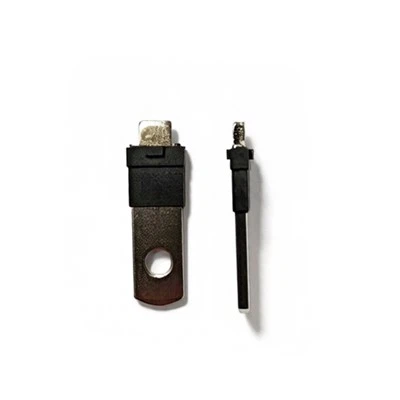
If you’re working on a project and need custom SA Standard Plug Pins, or you just have questions about how customization works, reach out to me. I don’t do hard sell— I’ll tell you straight up what’s possible, what’s not, and what will work best for your budget and timeline. No jargon, no hidden fees, no runaround.
Jp Standard Plug Pin References:
- South African Bureau of Standards. (2003). SANS 164-1: Plugs and socket-outlets for household and similar purposes – Part 1: Plugs and socket-outlets for a.c. systems.
- International Electrotechnical Commission. (2020). IEC 60884-1: Plugs and socket-outlets for household and similar purposes – Part 1: General requirements.
- Brass and Copper Industries Association of Southern Africa. (2022). Standard Specifications for Electrical Connector Components.
Dongguan Fangrun Metal Products Co., Ltd.
We’re well-known as one of the leading sa standard plug pin manufacturers in China, specialized in providing high quality customized products. Please feel free to buy discount sa standard plug pin made in China here from our factory. For quotation and free sample, contact us now.
Address: New Town Industrial Zone,Xiegang Village,Xie Gang Town,Dongguan City
E-mail: 825556703@qq.com
WebSite: https://www.fangrunpin.com/
