Hey there, thanks for popping in! I’m Jake, and let’s cut to the chase—if you’re here because you’re staring at a wonky, too-big or too-small seat cushion that either slides around like a bar of soap or crams your butt into a corner, you’re in the right spot. As the guy who’s spent the last 8 years building our little seat cushion company from a garage side hustle to a team that makes cushions for cafes, home offices, and even those weirdly shaped bar stools you can never find cushions for, I’ve measured way more seat sizes than I can count. Most people think “measuring a seat” is just grabbing a tape and winging it—but trust me, skip the guesswork, and you’ll save yourself the headache of returning a cushion that’s too short, too narrow, or way too deep. Today, I’m walking you through the exact, no-BS steps I use with every bulk order we get, plus the tiny little tricks most people miss that make all the difference. Let’s dive in. Seat Cushion

First off, let’s talk about the most important rule here: don’t guess the seat size. I’ve had a cafe owner come to me last month swearing their booth seats were “30 inches wide”—only to measure and realize they were 32 inches wide, and that tiny 2-inch difference meant their original cushion order would hang over the edges like a sad party balloon. Why does this matter? A cushion that’s too narrow leaves empty space on the sides, so people shift around and slide off—our anti-slip bottom tech works best when the cushion fits snugly. If it’s too wide, it crams into the back of the seat or hangs over the front edge, so when you sit down, the cushion bunches up and you end up with a weird pressure point on your thighs. For every single seat I measure, I use a basic cheap tape measure (the kind you can grab at the dollar store—no fancy laser stuff needed) and a notebook to jot down numbers. No overcomplicating this part.
Let’s start with the big three measurements everyone needs: width, depth, and height. Wait, height? Yeah, that’s not just for people—you need to know how tall the seat is off the floor too, but we’ll get to that later. First up, width. This is the most straightforward, but so many people mess it up. When measuring width, you’ve got to do it at the widest part of the seat. Now, here’s the trick: don’t just measure the top edge, where the seat cushion usually sits. Most seats have a little lip or metal frame that sticks out a tiny bit under the top. If you measure the top, you’ll come up short, and your cushion will be too small. Instead, I stick the tape measure on the inside of the left edge of the seat’s frame, stretch it straight across to the inside of the right edge, and make sure it’s parallel to the front and back of the seat. Why parallel? Because if the seat is weirdly shaped (like those curved booth seats), measuring at an angle will give you a wrong number. For curved seats, I still measure the widest point straight across—don’t follow the curve, that’ll make your cushion too long. Last month, a church came to us with curved pews, and that’s exactly what they almost did—by measuring straight across instead of following the curve, we got a 2-inch difference that made their cushions fit perfect, no gaps on the sides. Pro tip: write down the width in inches (we work in inches mostly, but if you use cm, just convert it later—1 inch = 2.54 cm, easy peasy). And if it’s a really long seat, like a restaurant booth for two, measure each side separately—don’t just measure the whole thing, because each person sits in their own section. That way, we can make two separate cushions instead of one big one that’s impossible to keep in place.
Next, depth. This is the measurement that trips up even experienced folks. Depth is how far the seat goes from front to back, right? But again, where exactly do you measure? The back of the seat, that’s the part where your lower back rests, and the front edge, where your thighs hit when you sit. But here’s the thing: you can’t measure all the way to the back of the seat’s backrest. Wait, no—wait, let’s clarify: for most seats, you want to measure from the front edge (the part closest to your knees when you’re sitting) straight back to the point where your lower back touches the seat, not the actual wall or backrest. Wait, hold on, let me get that right because this is super important. If a seat is against a wall, measuring depth from the front edge to the wall will give you a number that’s way too big. Because when you sit, your lower back isn’t pressed against the wall—there’s usually a small gap, like 1 or 2 inches, depending on how you sit. That’s the mistake everyone makes. Let me break it down: sit in the seat yourself, or take a friend who’s average height (5’8” to 5’10”, that’s most people). When you’re sitting comfortably, not slouching all the way back, where does your lower back hit the seat? Measure from the front edge of the seat (the part that’s closest to your legs) straight back to that point on the seat where your lower back rests. That’s the depth you need. Why does this matter? If you make the cushion too deep, the front edge of the cushion will hit the back of your knees, cutting off circulation after 20 minutes of sitting—super annoying, and people will end up pushing the cushion back or taking it off. Last year, a home office customer came to us with cushions that made their legs fall asleep—they’d measured all the way to the back of the desk chair’s backrest, not the point where their lower back actually rested. Fixing the depth to where they sit comfortably solved that problem instantly. For really deep seats, like some restaurant booths, we can add a small notch in the back of the cushion to give a little extra space, but measuring that comfortable depth first keeps it from being too long. Another pro tip: always measure depth twice, front to back, just to make sure—seats can be slightly uneven, so a double check eliminates mistakes.
Okay, now height. Most people don’t think about this, but it’s make-or-break for comfort, especially if you’re using the cushion for sitting for long periods—like an office chair, a bar stool, or a dining room chair. Height here isn’t how thick you want the cushion to be (we can customize that, by the way—we do 2-inch, 3-inch, even 4-inch cushions for people with back issues), it’s how high the seat is off the floor. Why does that matter? Because if your seat is 24 inches high (like a standard dining chair) and you have a 3-inch thick cushion, your legs will dangle, and your feet won’t touch the floor. That’s bad for circulation, and it puts extra pressure on your lower back. If you have a bar stool that’s 30 inches high, a 2-inch cushion is perfect—add 3 inches, and your feet will hang way too high. We always ask for the seat height when a customer reaches out, even if they don’t think it’s important. Last month, a yoga studio ordered cushions for their meditation chairs—they had super low seats, 16 inches high, so they needed thin 1.5-inch cushions, and that made all the difference for their students, who could sit cross-legged without their knees hitting their chests. If you don’t know the seat height, just sit in it and see where your feet land—if they dangle more than a few inches, you might need a thinner cushion, or if they’re flat on the floor and you’re cramped, a thicker one works. But always give us the actual seat height when you order, and we’ll match the cushion thickness accordingly.
Now, the weird, off-the-wall seats—you know the ones: booth seats that curve, L-shaped corner seats, bar stools with a round seat, even those tiny kid’s seats. Let’s tackle those, because our company does custom cushions for all kinds of odd stuff, so we’ve got this down. For round seats (like bar stools or patio chairs), you don’t measure width and depth—you measure the diameter. Just lay your tape straight across the center of the seat, from edge to edge, that’s your diameter. Super easy, no angles, no fuss. For curved booth seats, like I mentioned earlier, don’t follow the curve for width—measure the straightest part of the curve (usually the middle, where people sit) for width, and for depth, measure from the front edge of the curve back to where your lower back rests, same as a flat seat. For L-shaped seats (like in open-concept living rooms), you need to measure each separate section—don’t make one big cushion that covers the whole L, because people sit on each side separately, and that big cushion will move around. Split it into two parts, each with their own width and depth measurements. And for small seats, like car seats or airplane seats? Same rule: measure the widest point, the front edge to where your lower back rests, and the seat height. We’ve made custom cushions for moms who need extra support in their minivan seats, and it’s all about getting those exact measurements right.
Wait, I can’t leave out the most common mistake I see all the time. People measure the cushion they already have, the one that’s not working, instead of measuring the actual seat. That seems like it would work, right? But old, worn-out cushions get squashed down, so their dimensions are smaller than the actual seat. Last year, a café tried replacing their 5-year-old cushions by measuring the old ones, and the new ones were 2 inches too narrow, because the old ones had been flattened by years of use. Always, always measure the seat, not the old cushion. Even if the old one fits great, measure the seat just to be sure—seats can warp over time, especially wooden ones that get wet or dry out. It’s 2 minutes of work, way better than having to return a whole order of cushions because they don’t fit.
Let me give you a quick example to tie this all together, so it’s not just numbers. Let’s say you’re a small cafe owner, getting cushions for your 4 standard dining chairs. First, measure each seat’s width: grab tape, stick left frame edge to right frame edge, straight across, parallel to front and back, write down 22 inches. Next, depth: sit in a chair, measure from front edge to where your lower back rests, that’s 18 inches. Height: seat is 24 inches off the floor, so a 3-inch cushion works. Now, those chairs are standard, but if they were curved booth seats: width is still 22 inches (straight across the middle), depth is 20 inches, seat height 25 inches, so a 2.5-inch cushion. See? Same process, just adjust for the seat shape. No rocket science, just consistent measuring.
And here’s the cherry on top, from our experience: when you order bulk cushions from us, we always check your measurements before we make anything. We’ll send a quick note to confirm, like “You said your seats are 22w x 18d x 24h—sound right?” That way, even if you messed up a number, we catch it before we cut the foam. We’ve been doing this long enough that we can spot a wrong measurement right away, but it’s way easier if you get it right the first time. No guesswork, no returns, just cushions that fit like they were made for the seat (because they basically are).
Now, if you’re a business owner, a home renter, or anyone who needs custom seat cushions—cafe, office, church, patio, whatever—we make it easy. We use high-density foam that doesn’t flatten out fast, and durable fabric that stands up to spills, pet hair, whatever you throw at it. We don’t do generic cushions that fit 90% of seats—we do custom ones that fit 100% of yours, as long as you give us the right measurements. If you’re not sure about how to measure, just reach out—we’ll walk you through it step by step, no pressure, no fine print. We’ve worked with everything from a tiny bakery with 6 seats to a big restaurant chain with 200 booths, and we know how frustrating it is to get cushions that don’t fit.
So to recap, the only steps you need to do: 1) Grab a cheap tape measure and notebook, no fancy tools. 2) For width: measure the widest point of the seat, straight across, parallel to front/back, not the old cushion. 3) For depth: measure from front edge to where your lower back rests when sitting comfortably, not to the wall or backrest. 4) Note the seat height for cushion thickness. 5) For weird seats (round, curved, L-shaped), adjust measurements to each section, follow the same core rules. That’s it. No overcomplicating, no jargon, just simple measuring that works.
If you’ve got a project coming up, whether it’s a single chair or a whole venue, hit us up to chat about your cushion needs. We’re here to make sure you get cushions that fit perfect, feel good, and last. Stop settling for cushions that slide around or leave you sore—get the right measurements, and you’ll be way happier with the result.
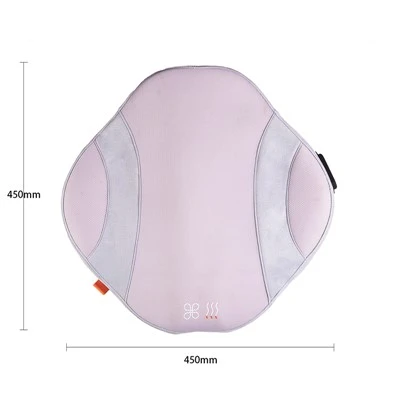
Thanks for reading this long, rambling (but totally honest) guide. I used to think measuring seats was a pain, but now it’s second nature, and it’s the reason our customers keep coming back. Now go measure those seats—you’ve got this.
Hemorrhoid Cushion References:
- American National Standards Institute (ANSI). (2018). Ergonomic Design of Seats for Public and Commercial Spaces. ANSI/HFES 100-2018.
- Occupational Safety and Health Administration (OSHA). (2021). Guidelines for Office Workstation Setup and Seat Measurements. OSHA Technical Manual, Section 5.
- International Society of Furniture Designers (ISFD). (2020). Custom Cushion Specification Guide for Commercial and Residential Applications. ISFD Industry Standards.
Elion Medlink (Hefei) Medical Technology Co., Ltd.
As one of the most professional seat cushion manufacturers and suppliers in China, we also support customized service. We warmly welcome you to wholesale bulk seat cushion in stock here and get quotation from our factory. Quality products and low price are available.
Address: 3rd Floor, Building B, No.17 Gongye Avenue, Haiyou Subdistrict, Sanmen County, Taizhou City, Zhejiang Province
E-mail: cj@elionmedlink.com
WebSite: https://www.magicushion.com/
