If you work with structural or architectural steel, JIS Corten Steel is likely a material you’ll encounter—and often rely on. As a long-time supplier of JIS-standard weathering steel, I’ve watched too many projects cut corners on testing its strength, only to face premature corrosion, structural failure, or wasted costs down the line. The thing about JIS Corten is that its rust layer isn’t just decorative; it’s a protective patina, and its strength performance is tied directly to how that patina forms. Testing that strength isn’t just a checkbox for compliance—it’s how you make sure your steel will hold up for decades, whether it’s a bridge railing in a coastal city or a custom facade in a rainy region. JIS Corten Steel
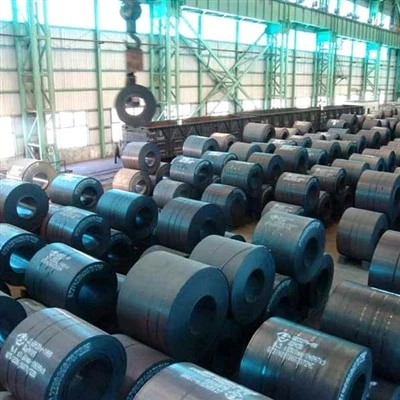
A lot of folks reach out to me saying they want to test Corten strength, but they’re not sure where to start. Some use generic steel tests that don’t account for Corten’s unique weathering properties, while others skip non-destructive tests entirely, only to damage a full project element. Over the years, I’ve refined a step-by-step approach that balances scientific rigor, compliance with JIS G 3125 (the official Japanese Industrial Standard for weathering steel), and practicality for both lab testing and on-site checks. This isn’t just theory—it’s what we use every day in our warehouse to qualify incoming steel and help our customers validate their materials. Let’s break it down.
First, it’s critical to distinguish between two core types of strength we test for JIS Corten Steel: base metal strength, and the strength of the protective rust patina. Too many suppliers (even some ones I’ve worked with) only test base metal tensile strength and call it a day, but that misses the point. The whole reason Corten is valued is that its patina reduces the steel’s corrosion rate by up to 10x compared to carbon steel, so the two strengths are interdependent. A steel that passes base strength tests might still develop a porous, non-protective rust layer if the alloy chemistry is off—something that only shows up in patina-related testing.
Starting with base metal strength: this is the foundational test that every JIS Corten Steel batch must pass to meet the standard. JIS G 3125 specifies exact tensile strength, yield strength, and elongation requirements for three common grades: SMA400AW, SMA400BW, and SMA490AW. SMA400AW is the most popular for general architectural and structural use, with a minimum yield strength of 235 MPa, tensile strength between 400 and 540 MPa, and elongation of at least 20% for thicknesses under 16mm. SMA490AW is higher-strength, with a minimum yield of 325 MPa and tensile strength 490–610 MPa, ideal for heavy structures.
To test these values, we use standard destructive tensile testing, per JIS Z 2241, which is the Japanese standard for metal tensile testing. Here’s how it works in practice: when a batch of JIS Corten arrives at our warehouse, we take three random 50mm-wide test coupons from different parts of the coil or plate—one from the top, one from the middle, one from the edge (edges often have slight processing variations that can affect strength). We machine the coupons to the specified gauge length (for most Corten plate, that’s 50mm, per JIS specs) and mark them with punch marks to measure elongation. Then we mount the coupon in a universal testing machine (UTM) that pulls it apart at a controlled rate (1mm per minute, per JIS guidelines). The machine records the force applied as the coupon stretches, and we get three key values: yield strength (the force at which permanent deformation starts), tensile strength (the maximum force before fracture), and elongation (the percentage the coupon stretched before breaking).
I’ve seen too many test coupons fail because they were taken from the wrong part of the plate. For example, the trim edge of a steel plate often has slight hardening from cutting, so a coupon from there might show artificially high strength, while a coupon from the center might be weaker. That’s why random sampling across the batch is non-negotiable. If any of the three coupons fails to meet JIS specs, we reject the entire batch—no exceptions. One time, a customer brought in a cheap Corten from a non-JIS supplier; their tensile test showed 320 MPa yield strength, which was 15% below SMA400AW’s requirement, and it later developed rust holes in just two years. That’s the risk of skipping proper base strength testing.
Next, we test the strength of the protective rust patina, which is where most Corten testing goes wrong. A lot of people think any rust on steel is good, but JIS Corten needs a dense, adherent patina to be effective. Porous, flaky rust doesn’t protect the base metal, and over time, it can cause structural degradation. So how do we test patina strength without cutting into a finished piece?
Non-destructive adhesion testing is the first step here, and it’s quick enough to do on-site if needed. We use a cross-cut test, per ASTM D3359, which aligns with JIS’s own patina testing guidelines. For this, we make 10 parallel cuts 1mm apart through the rust layer down to the base steel, then make another set of cuts perpendicular to the first, forming a 10×10 grid of 1mm squares. Then we apply a pressure-sensitive adhesive tape (the same type used for paint adhesion tests) firmly over the grid and pull it off at a 180-degree angle. We rate the patina on a 0–5 scale: 0 means no rust is removed (perfect, adherent), 5 means more than 65% of the rust comes off (bad, porous). For JIS Corten, we require a rating of 0 or 1 for outdoor applications, and the test only takes 5 minutes per sample.
I’ve used this test on a job site in Miami, where coastal salt air accelerates rust formation. The contractor had used a cheap Corten that failed the cross-cut test, with a rating of 4—so their facade was already starting to flake and stain adjacent materials. We recommended they replace it with our JIS-grade SMA400AW, and when we did a cross-cut test on a sample, it was a 0, meaning the patina wouldn’t flake off. That’s the difference between testing the right material and cutting corners.
Another test for patina strength is corrosion rate testing, which is more thorough but requires lab equipment. Per JIS G 3125, we expose Corten samples to a standardized corrosive environment—usually a salt spray chamber, per JIS Z 2371, which simulates coastal or industrial conditions. We weigh the sample before exposure, expose it to 5% salt spray at 35 degrees Celsius for 1000 hours, then clean the rust from the sample’s surface and re-weigh it. The corrosion rate is the weight lost per unit area. For JIS Corten, the corrosion rate after 1000 hours should be less than 0.1 mm/year, which is 10x lower than standard carbon steel. This test tells us not just that the patina is strong, but that it will protect the steel over time in harsh conditions.
We also do bend testing for JIS Corten, which is a key quality check for formability. A lot of structural steel needs to be bent into beams, rails, or custom shapes, and if the steel is too brittle, it will crack when bent. Per JIS Z 2248, we take a test coupon of the full thickness of the Corten, and bend it 180 degrees around a mandrel of a diameter equal to the steel’s thickness. If the surface of the bend has no cracks longer than 1mm, it passes. I once had a fabricator tell me their previous Corten cracked when they bent it for a bridge railing; our JIS-grade SMA400AW passed the bend test with no issues, which is why we include bend testing as a standard step for all our shipments.
Now, for on-site testing—because a lot of our customers don’t have access to a lab, so they need ways to validate JIS Corten strength once it’s delivered. The go-to non-destructive test here is ultrasonic testing (UT), which measures the thickness of the base steel and checks for internal defects, and eddy current testing (ECT), which detects alloy variations. JIS Corten has a specific alloy composition (0.2%–0.5% copper, 0.4%–0.6% chromium, 0.05%–0.1% phosphorus) that gives it the weathering properties, so ECT can confirm that the alloy is correct—no filler steel passed off as Corten. One trick we share with customers is to use a magnet: pure carbon steel is magnetic, but Corten’s alloy content makes it slightly less magnetic, so a strong magnet won’t stick as tightly as it would to carbon steel. That’s a quick visual check, but it’s not a replacement for formal testing—just a way to spot obvious fakes.
I should also mention a common mistake customers make: testing Corten too early. The patina takes 6–12 months to fully form, so if you test a new Corten piece right after installation, you might get a false low adhesion rating because the patina isn’t fully developed. That’s why we tell customers to wait at least a year before doing a full patina strength test, and to do the cross-cut test on a small, hidden spot first. If the patina is strong after a year, it will only get stronger over time.
At the end of the day, testing JIS Corten Steel isn’t just about compliance—it’s about ensuring your project lasts. Too many projects fail because they cut corners on testing, and I’ve seen the cost of replacing a facade or repairing a bridge far exceed the cost of proper testing upfront. If you’re working on a project that requires JIS Corten, and you need help testing material strength, validating a batch, or getting guidance on which grade is right for your application, reach out. We don’t just supply JIS Corten Steel—we’ve been in the industry for decades, and we work with contractors, architects, and engineers to make sure their materials meet the highest standards. Don’t risk your project on untested steel; connect with us to discuss your needs, and we’ll help you get the right testing and materials every step of the way.
High Strength Low Alloy Steel Plate References
JIS G 3125: Hot-rolled Weathering Steels, Japanese Standards Association, Tokyo, 2019.
JIS Z 2241: Method of Tensile Test for Metallic Materials, Japanese Standards Association, Tokyo, 2020.
JIS Z 2248: Bend Test for Metallic Materials, Japanese Standards Association, Tokyo, 2021.
ASTM D3359: Standard Test Method for Measuring Adhesion by Tape Test, ASTM International, West Conshohocken, 2022.
JIS Z 2371: Salt Spray Test for Corrosion Resistance, Japanese Standards Association, Tokyo, 2018.
Gnee Steel (Tianjin) Co., Ltd.
As one of the most professional jis corten steel manufacturers and suppliers in China, we also support customized service with low price. We warmly welcome you to buy high quality jis corten steel in stock here from our factory. If you have any enquiry about free sample, please feel free to email us.
Address: No.4-1114, Beichen Building, Beicang Town, Beichen District, Tianjin, China
E-mail: alloy@gneesteelgroup.com
WebSite: https://www.chinavesselplates.com/
