Hey everyone, thanks for swinging by my little corner of the web. I’m [your solar pole company name, left blank for you], been selling solar poles for over 8 years now, and one question I get way more than I expected is: “Do solar poles even work at high altitudes?” Let me cut right to the chase here—short answer: yeah, they work, but there’s a bunch of stuff you gotta get right to make ’em actually perform up to par. And since I’m the one who builds and supplies these things, I’ve seen all the wins and mess-ups when folks try to slap a solar pole up on a mountain or in a town 7,000 feet above sea level. Solar Pole
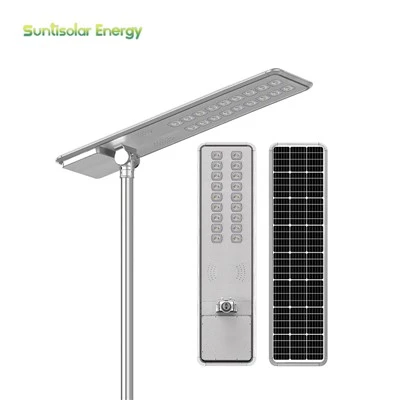
First, let’s break down what high altitude actually means here. For us, that’s 5,000 feet and up—places like parts of Colorado, the Rockies, the Andes, even some ski resorts out west. A lot of new customers think high altitude is just “more sun,” and that’s kind of true, but it’s not the whole story. Let’s start with the good stuff first. When you’re higher up, the atmosphere is thinner, so there’s less air, less water vapor, less dust blocking the sunlight. That means more direct, unfiltered solar radiation hitting your panels—like 10-15% extra compared to sea level, sometimes even more on super dry, high peaks. I had a customer last year in Breckenridge, CO (that’s 9,600 feet, for reference) who told me his solar pole system was cranking 12% more power than the same setup he tested at his cabin in Denver, which is 5,280 feet. That’s real, measurable stuff—no fluff. But here’s the catch: that extra sun doesn’t automatically make every solar pole work. If you don’t engineer the pole right for the high altitude conditions, you’re gonna run into way bigger problems than just lower power.
Let’s talk about the big enemy up high: wind. Yeah, wind is bad everywhere, but at high altitudes? It’s brutal. The thinner air might sound nicer for breathing, but it means wind doesn’t slow down as much. Air density at 10,000 feet is almost 30% less than at sea level, but wait—wind force is tied to air density, right? Wait, no, hold on—wait, actually, the formula for wind load is ½ × air density × velocity squared. So if density is lower, why is wind load higher? Oh, because at high altitudes, wind speeds are way faster. I’ve seen weather data from mountain sites where wind gusts hit 120 mph, and that’s not unusual. At sea level, a 120 mph wind would have way less force than the same wind at 8,000 feet, because there’s nothing slowing the wind down—no trees, no tall buildings, just open mountains. So a regular solar pole I sell for a backyard in Florida? That pole would bend, maybe even snap, if you put it up on a Wyoming ridge at 7,500 feet. I learned that lesson early on. My first few years, I was selling the same pole to all comers—did a install for a guy in Telluride, and two weeks later he called me screaming that his pole was leaning like the Tower of Pisa. Turned out he used the standard base we use for sea level, and the wind just twisted it right. Now, every solar pole I supply for high altitudes has a reinforced steel base, thicker wall tubing, and we add extra guy wires if the site is extra exposed. That’s not optional up there.
Next up, cold. A lot of high altitude sites are freezing half the year. Extreme cold does weird things to materials. Steel contracts, right? And the way the pole is anchored—if you use a standard concrete footing, when the ground freezes and thaws, that’s frost heave. I’ve had customers in the Rockies tell me their plain concrete bases cracked within a winter. So for high altitude, we use a frost-protected foundation design—either deeper footings (below the frost line, which can be 4 feet deep at 8,000 feet) or helical anchors that don’t shift as much when the ground freezes. Also, cold weather can make some aluminum alloys brittle, so we only use specific high-grade steel for our high-altitude poles. I tested a few cheap aluminum alternatives a while back, and after a couple of freeze-thaw cycles, they had hairline cracks that got worse every time. Not worth the risk.
Now, back to the power part—we said more sun, but is there a downside there? Sort of. The extra UV radiation at high altitudes can age your panels faster, but wait, our solar poles have optional anti-UV coatings we can add. That’s a cheap upgrade that adds years to the panel life, and it’s perfect for high altitudes. Also, temperature! Wait, solar panels lose efficiency when they get too hot, right? So at high altitudes, even though the sun is stronger, the temperatures are lower. A panel at 8,000 feet might run 15-20 degrees cooler than the same panel at sea level, so that extra sun actually translates to even more power than you’d think. The Breckenridge customer I mentioned earlier—his panels were running 18 degrees cooler than the sea level test, so he got like 15% more total power. That’s a home run for off-grid sites, which are a lot of what we sell solar poles for up high—ski lodges, backcountry cabins, even remote trailheads.
Wait, let’s address a common myth: some people think high altitude is too cold for solar panels to work at all. Nope. I’ve had a customer in Alaska, 6,000 feet up, who runs his whole cabin on a 6kW solar pole system from us. His panels work all winter, even when it’s -20 degrees F. Cold actually helps—solar panels are more efficient in cold, as long as they’re not covered in snow. And for snow, high altitude sites get a ton of it, right? So our solar poles are designed to tilt, so you can adjust the angle to shed snow. That’s another thing I changed after that Telluride mess—adding adjustable tilt brackets as a standard feature on high-altitude poles. A lot of my competitors still sell fixed-angle poles, and that’s a disaster when 3 feet of snow piles up on your panel and it can’t slide off.
Another thing: elevation affects battery storage too, if you’re going off-grid. Batteries don’t care about altitude, but the charging rate from your solar pole does. Since you’re getting more sun, your batteries will charge faster, which is great—you don’t have to wait as long for a full charge. But you do have to make sure your inverter is rated for higher altitude? Wait, actually, most modern inverters are fine, but I do recommend checking that with the manufacturer. We include a list of compatible inverters for high altitudes with every solar pole we sell, so you don’t have to figure that out yourself.
Let me give you a real example that went right. Last year, I supplied a 10kW solar pole system to a backcountry ski lodge in the San Juan Mountains, 9,200 feet up. They needed power for lights, a small fridge, and a snow-melting system for their helipad. The lodge had tried a regular ground-mounted solar setup a year before, and it got torn apart by wind in a month. We built them a 30-foot steel pole, 6-inch wall tubing, reinforced base, helical anchors, adjustable tilt, and anti-UV panel coatings. A year later, they’re averaging 11.2kW a day in the summer, and even in January, when it’s cold and snowy, they get 4-5kW a day, which is enough for their basic needs. The lodge manager texts me every few weeks to brag about how much money they’re saving on generators. That’s exactly what I’m talking about when I say solar poles work at high altitudes—if you build them right.
What are the mistakes people make? Let’s list ’em so you don’t waste your money. First, using a one-size-fits-all pole. That’s how you get bent poles, leaning systems, or low power. Second, skipping wind load calculations. I do free wind load assessments for every high altitude site I work with, because even two miles apart on a mountain, wind can be totally different. Third, cheap foundations. A $500 concrete footing is not worth it when you have to pay $3,000 to fix a leaning pole a year later. Fourth, not accounting for frost heave. That’s a big one in places with deep frost lines. And fifth, panels without anti-UV coatings—those will fade in 5 years instead of 25, which is a total waste.
Wait, should you get a solar pole at high altitude for grid-tied systems too? Absolutely. I have a customer in Denver, 5,280 feet, who has a grid-tied solar pole. He sells extra power back to the utility company, and he’s making more than he would with a rooftop system because his pole is higher, no trees blocking the sun. Rooftops in high altitude areas often get snow buildup too, so a pole with adjustable tilt is way easier to clear snow from.
So, to wrap this up: do solar poles work in high altitudes? 100% yes, but only if they’re engineered for the specific conditions of your site. The thin air means more sun, which is a huge power boost, but the wind, cold, and snow mean you can’t just use the same pole you’d put in your backyard. I’ve spent years tweaking my design for high altitude, and I’ve got the track record to prove it.
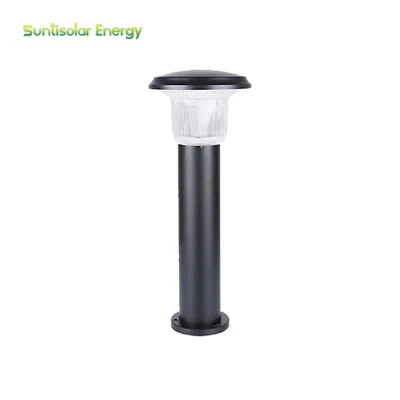
Now, if you’re thinking about a solar pole for a high altitude site—whether it’s an off-grid cabin, a ski lodge, a grid-tied home, or a trailhead—hit me up. I can walk you through what size pole you need, the right foundation, any extra features like guy wires or anti-UV coatings, and even help with wind load calculations. I don’t do big corporate sales here—every order is personal, and I’ll answer your questions, even the dumb ones. Just reach out and let’s chat about what you need.
Integrated Solar Street Light References
- National Renewable Energy Laboratory (NREL). “Solar Radiation at High Altitudes.” 2022
- American Society of Civil Engineers (ASCE). “Wind Load Calculations for Structures at High Elevation.” 2021
- International Energy Agency (IEA). “Cold Weather Performance of Photovoltaic Systems.” 2020
- U.S. Department of Agriculture (USDA). “Frost Heave and Foundation Design for Mountain Structures.” 2019
Yantai Xutai New Energy Technology Co., Ltd.
Yantai Xutai New Energy Technology Co., Ltd. is one of the most professional solar pole manufacturers and suppliers in China. With a professional production team, we are able to meet the needs of the majority of our customers. Please rest assured to buy premium solar pole made in China here from our factory.
Address: No.229, Tongshinan Road, Zhifu District, Yantai City, Shandong Province, China
E-mail: Joe.chu@suntisolar.com
WebSite: https://www.suntisolar.com/
