When you’re working in the industrial power distribution space, you hear a lot of jargon—and one term that comes up more often than people think is “live tank switchgear.” I’ve been a switchgear supplier for over 12 years, and I still meet customers who mix it up with dead tank gear, so today I want to break this down simply, without all the overly technical fluff that makes this stuff hard to follow. Switchgear
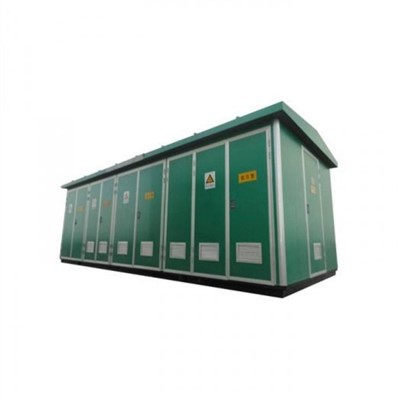
First, let’s start with the basics: switchgear is the equipment that controls, protects, and isolates electrical power in industrial, commercial, and utility settings. Every time you turn on a factory’s heavy machinery, power a data center, or keep a hospital’s emergency generators running, switchgear is working behind the scenes to make sure that power flows safely, and stops when it needs to.
Now, live tank vs. dead tank—this is all about where the high-voltage components live inside the enclosure. In dead tank switchgear, the main high-voltage parts (like circuit breakers, disconnects, and busbars) are sealed inside an earthed, grounded metal tank. That metal tank is connected directly to the building’s ground system, so it acts as a physical barrier between the high-voltage electricity and the outside environment. Think of it like a pressure cooker: the dangerous stuff is sealed inside a grounded box, and you never touch it without shutting the power off first.
Live tank switchgear flips that design on its head. Here, the high-voltage components are not inside a grounded metal tank. Instead, the live parts are suspended (or “live”) inside a gas-insulated or air-insulated enclosure, and the enclosure itself is grounded, but not holding the high-voltage parts. That’s the core difference. Now, let’s get into why that matters—because that design choice shapes everything from installation space to maintenance costs.
Over the years, I’ve sold both types, and I’ve seen first-hand where live tank gear shines. Let’s start with the design benefits that make it popular for many of our clients. One big plus is compactness. Because the high-voltage parts aren’t crammed inside a thick, heavy grounded tank, live tank switchgear can be smaller than equivalent dead tank units. For sites where floor space is at a premium—like urban substations, tight industrial facilities, or retrofits where you can’t easily expand your electrical room—this is a game-changer. We’ve had clients in downtown manufacturing plants tell us they could fit a 12kV live tank unit in the space they previously used for a smaller, less powerful dead tank model, without having to rearrange their entire facility.
Maintenance is another area where live tank switchgear comes out ahead, in my experience. With dead tank gear, to service the circuit breaker, you often have to lift heavy parts, remove large tank sections, and completely drain the insulating gas or oil inside the tank before you can access the components. That means longer downtime, more specialized tools, and higher labor costs. Live tank design lets you access the circuit breaker and other parts through removable panels on the side of the unit, without having to disassemble a heavy tank or drain insulating media. Most of our clients who use live tank gear report 30 to 40 percent shorter maintenance windows, which adds up to less lost production for factories or less disruption for commercial buildings. That’s a big deal—when a factory shuts down for a day, that’s thousands of dollars in lost output; shorter maintenance stops directly hit the bottom line.
Then there’s reliability, especially in harsh environments. Wait, let me clarify that: live tank gear can be more reliable in outdoor or dirty settings. Because the high-voltage parts are insulated either by dry air or a gas like SF6 (sulfur hexafluoride, which is common in high-voltage applications) sealed within their own small, insulated modules, they’re less exposed to dust, moisture, or environmental contaminants than the exposed or semi-insulated parts in some dead tank units. We’ve supplied live tank units to coastal facilities, where salt spray can corrode electrical components, and to mining sites, where coal dust is everywhere, and those units have held up better than older dead tank models we sold to similar sites a decade ago.
But here’s the thing: live tank switchgear isn’t perfect, and it’s not the right choice for every job. I never push a client to pick one just because it’s what our team sells— I have to be honest about the trade-offs, too. For starters, live tank units can be more expensive upfront than dead tank gear of the same voltage rating. The precision manufacturing needed to suspend high-voltage parts safely, and the insulated modules that hold those parts, add to the material and production costs. That’s a big consideration for smaller businesses or projects with tight initial budgets.
Another trade-off is safety training. Because live tank gear has exposed (well, “live”) high-voltage parts, technicians have to follow stricter lockout/tagout (LOTO) procedures and know exactly how the unit is wired. I’ve seen a few new technicians cut corners because they were used to dead tank gear, where the metal tank is a foolproof barrier. That’s why we always include free safety training with every live tank unit we sell— it’s not just a sales tactic, it’s how we keep our clients’ teams safe.
Also, for very high-voltage applications (like 145kV and above), dead tank switchgear is still the industry standard. The engineering required to insulate live parts at those voltages gets far more complex, and the grounded tank design is just more proven for those higher power levels. I can count on one hand the number of times we’ve supplied live tank gear for 200kV or more projects— almost all of those are custom, specialized utility projects.
Let me also talk about the current trends I’ve seen in the switchgear market, because that shapes what live tank switchgear looks like today, not just how it’s been used for the past 30 years. A lot of our clients are moving toward digital or “smart” switchgear— units that monitor their own performance, detect faults before they cause outages, and connect to a building’s or facility’s automation system. Live tank switchgear is easy to integrate with these smart features, because the modular design makes it simple to add sensors, current transformers, and monitoring modules without reworking the entire enclosure. We’ve added remote monitoring capabilities to live tank units for a data center client in Chicago, and that let them catch a minor busbar wear issue before it caused a 4-hour outage— something they said saved them over $100,000 in lost revenue.
Another trend is sustainability, which has been huge for our business over the last five years. Dead tank switchgear often uses oil as an insulator, which can be a hazard if it leaks, and SF6 gas has a very high global warming potential (GWP). While many live tank units also use SF6, the modular design means we can now offer dry-air insulated live tank options for lower-voltage applications (up to 38kV) that avoid SF6 entirely. That’s become a big sell for clients working on green building certifications, or utilities setting goals to reduce their carbon footprint.
Wait, let’s address a common myth I hear all the time: people think “live tank” means the high-voltage parts are exposed, or that it’s less safe. That’s not true at all. The live parts are enclosed in their own insulated chambers, and the outer enclosure is grounded just like a dead tank unit. The key difference isn’t safety in terms of electrical shock risk when the unit is properly installed and maintained—it’s the design for accessibility and space. I always tell new clients: the best way to think of it is, dead tank is like a locked toolbox where all the tools (high-voltage parts) are inside, and the whole box is grounded. Live tank is like a workbench where the tools are on a insulated stand in the middle, and the bench itself is grounded. Both keep you safe, but one is easier to reach the tools when you need to fix them.
Let me give you a real example to put this in perspective. Last year, a food processing plant in Ohio came to us because they needed to upgrade their main switchgear to support a new canning line. Their existing dead tank unit was too big to fit in their electrical room, which was originally built for a much smaller facility. They were also tired of the 12-hour maintenance windows every year, which forced them to shut down their production line for a full day. We proposed a 12kV live tank switchgear unit. It fit in 40 percent less space than their old dead tank gear, and we scheduled the maintenance window for 5 hours instead of 12. They saved over $20,000 in lost production that year alone, and the upfront cost was a little higher, but they recouped that in under 18 months. That’s the kind of return on investment we see from live tank gear all the time.
Of course, there are still scenarios where dead tank is the clear choice. If a client has a very tight budget, or is working on a 145kV or higher substation, dead tank is usually the better pick. Also, for temporary power applications—like a construction site where you only need switchgear for a season—dead tank is more common, because it’s cheaper to rent or buy for short-term use.
So, when should a client choose live tank switchgear? Let me sum up the cases we see most often at our company: if you need compact units for space-constrained sites, if you want to reduce maintenance downtime and costs, if you’re upgrading an existing facility and can’t rearrange your electrical room, or if you’re building a smart or green power system, live tank switchgear is almost always the right fit.
I’ve been in this industry long enough to see switchgear technology change a lot, but the core principles of choosing the right gear for your needs stay the same. Too many suppliers will push you to buy what they have the most of, or what’s cheapest for them to manufacture, not what’s best for your business. That’s why our team spends time talking through a client’s specific needs: how much space do they have? What’s their maintenance budget? Are they planning to add smart features in the next few years? All of those questions shape whether live tank switchgear is the right answer.

If you’re in the market for new switchgear, or you’re looking to upgrade your existing system and want to learn more about whether live tank switchgear makes sense for your facility, our team is here to help. We’ve worked with hundreds of industrial, commercial, and utility clients, and we can walk you through the trade-offs, answer your questions, and help you find a solution that fits your budget and needs. Don’t hesitate to reach out to start a conversation—we’re happy to share case studies, answer technical questions, or help you put together a custom proposal.
Low Voltage Transformer References
- IEEE Std C37.06-2019, “Standard for High-Voltage Alternating-Current Circuit Breakers Rated on a Symmetrical Current Basis for 1 kV Through 52 kV”
- International Electrotechnical Commission (IEC) 62271-100, “High-voltage switchgear and controlgear – Part 100: Alternating current circuit breakers”
- “Live Tank vs Dead Tank Switchgear: Design and Application Considerations,” Electrical Construction & Maintenance, 2022.
- U.S. Environmental Protection Agency, “Greenhouse Gas Emissions from Electrical Equipment: SF6 Alternatives,” 2021.
Huachi Electric Co., Ltd.
We’re well-known as one of the leading switchgear manufacturers in China, featured by quality products and good service. Please rest assured to buy customized switchgear made in China here from our factory. Contact us for more details.
Address: Plastic Park, Tongyu Street, Luqiao District, Taizhou City, Zhejiang Province
E-mail: HCDQ2026@163.com
WebSite: https://www.huachi-electric.com/
