If you’re a Tile Magnets supplier like me, or just someone who uses these handy little fasteners for organizing tools, displaying photos, or holding notes on metal surfaces, you’ve probably run into a common frustration: some tile magnets just aren’t as strong as they should be. I’ve been in this industry for seven years now, and I’ve helped hundreds of customers—from small craft shops to industrial maintenance teams—troubleshoot weak tile magnets. The good news is that making tile magnets stronger doesn’t have to involve expensive overhauls or switching to entirely new materials. Most of the time, the solution comes down to understanding how tile magnets work, the factors that affect their hold, and simple adjustments to boost their performance. In this post, I’m going to break down the science behind weak tile magnets, share the tricks we use in our manufacturing to make ours stand out, and give you actionable steps anyone can take to get the most out of their tile magnets. Tile Magnets
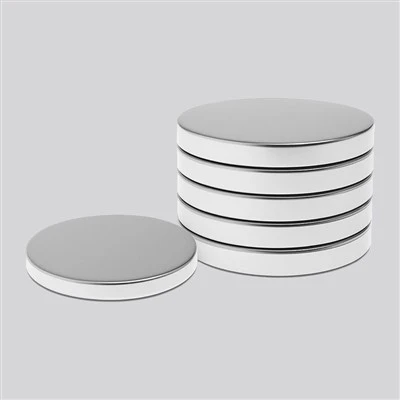
First, let’s start with the basics: what makes a tile magnet work. Tile magnets are almost always made of neodymium iron boron (NdFeB) magnets these days, or sometimes ferrite (ceramic) magnets, depending on the price point and use case. Neodymium is a rare earth metal that creates a much stronger magnetic field than older materials like alnico, which is why it’s the go-to for most modern tile magnets. The magnetic strength of a tile magnet is measured in gauss or pull force (in pounds or kilograms), and that number tells you how much weight it can hold when pressed against a flat, smooth metal surface. But here’s the thing: that pull force rating is only as good as the conditions around the magnet. A tile magnet that’s rated to hold 20 pounds might only hold 10 if you’re using it on a rusty fridge, or if it’s been exposed to high heat. That’s why so many people end up with “weak” magnets—it’s not always the magnet itself, but how it’s being used or treated.
Let’s talk about the most common reason tile magnets lose strength: demagnetization. Magnets, even the strong neodymium ones, can lose their magnetic charge over time if they’re not stored or used correctly. The biggest enemy here is heat. Neodymium magnets start to degrade when temperatures get above 80°C (176°F), and above 150°C (302°F), they can lose almost all their magnetism permanently. I once had a customer who complained that his tile magnets for hanging tools in a workshop were falling off constantly—turns out he was storing them right next to a space heater, which was running at full blast all day. We replaced his old magnets with high-temperature grade neodymium (we use N52H in our products, which can handle up to 120°C) and that fixed his problem. If you’re using tile magnets in a kitchen near an oven, or in a hot workshop, make sure you’re using a magnet grade designed for high temps. Regular neodymium will weaken fast, even if you think it’s not that hot.
Another big factor is surface contact. Tile magnets only work at their full strength when they’re pressed against a perfectly flat, smooth metal surface. If the surface is bumpy, rusty, or has a lot of paint or grease on it, the magnet can’t make full contact with the metal. The tiny gaps between the magnet and the surface break the magnetic circuit, so the hold is way weaker. I had a client who used tile magnets to hold signboards on a corrugated steel warehouse wall—those walls have all those ridges, so even a strong magnet can’t get a full seal. The solution there was to add a thin steel backing plate to the back of the sign. That way, the magnetic field spreads out, and the magnet doesn’t have to bridge the gaps in the corrugated metal. It’s a trick we use in our manufacturing too: some of our heavy-duty tile magnets come with a steel coating that fills in small surface imperfections, so the hold stays strong even on slightly uneven surfaces.
Size and thickness matter too. A lot of people think a tile magnet is a tile magnet, but the size and the thickness of the magnet core make a huge difference. We’ve tested this in our lab: a 2-inch diameter tile magnet that’s 1/4 inch thick will hold almost twice as much weight as the same diameter magnet that’s only 1/8 inch thick. The magnetic field gets weaker the further it spreads, so a thicker core means a stronger, deeper field. That’s why we don’t skimp on material when making our heavy-duty tile magnets—we use enough neodymium to get the pull force our customers need, instead of cutting corners on thickness to make the magnet cheaper. If you’re buying tile magnets for a job that needs to hold a lot of weight, always go for the thickest option you can, even if it’s a little more expensive. The stronger hold will save you from having to replace weak magnets later.
Coatings also play a role in strength, believe it or not. Neodymium magnets are prone to corrosion, so we coat ours with nickel, zinc, or epoxy to protect them. But not all coatings are the same. A thick, durable nickel coating is actually a good thing—it doesn’t add much thickness, so it doesn’t create a gap between the magnet and the metal surface. If you use a cheap, thick epoxy coating, though, that can create a tiny barrier between the magnet and the metal, which reduces the hold. I’ve seen customers buy cheap tile magnets from big-box stores that have a thick epoxy coat, and they wonder why the magnets are so weak. The coating is too thick, so the magnetic field can’t reach the metal surface properly. That’s why we use a thin, high-quality nickel coating on all our products— it protects the magnet without sacrificing strength.
Storing magnets correctly when you’re not using them is another easy way to keep them strong. Magnets can actually weaken each other if they’re stored improperly. If you stack multiple tile magnets flat, they’ll attract each other, and over time, that can pull the magnetic domains out of alignment, which reduces strength. The best way to store tile magnets is to keep them separated, either in individual slots in a storage bin, or with non-magnetic spacers (like plastic or wood) between them. We include a free storage case with all our premium tile magnets, and that’s a feature customers love because it helps them keep their magnets in good shape for years. I once had a customer who’d been storing his 50 tile magnets stacked in a drawer for two years—when he tested them, their pull force had dropped by almost 30%. We gave him the storage case, and within a month, he noticed they were holding stronger again. It’s a small change, but it makes a big difference.
What about if your tile magnets are already weak? Can you make them stronger again? In some cases, yes. If the magnet hasn’t been demagnetized permanently (meaning it’s not too hot or too old), you can re-magnetize it using a stronger magnet or a magnetizer tool. We sell magnetizer tools for our customers who need to revive weak magnets, and that’s a popular product for people who use tile magnets for industrial or craft projects. But if the magnet is old, or if it’s been exposed to extreme heat for a long time, re-magnetizing won’t work. That’s why it’s better to invest in a good set of tile magnets from the start, instead of trying to save money on cheap ones that will only weaken over time.
As a Tile Magnets supplier, I always tell our customers that the key to strong magnets is understanding their needs. If you’re using them in a cold, dry office on a smooth steel fridge, a standard N52 neodymium tile magnet will work perfectly. If you’re using them in a hot workshop on corrugated metal, you need a high-temperature grade with a steel backing. If you’re storing them for long periods, you need to keep them separated. The biggest mistake people make is buying the cheapest magnet they can find, not considering how they’ll use it. Cheap magnets often use lower-grade materials, thin cores, or poor coatings, so they start weak and get weaker over time. Our products are made with high-quality NdFeB cores, thick enough for maximum pull force, and coated with nickel to protect against corrosion without creating gaps. We test every batch of magnets in our lab to make sure they meet the pull force they’re rated for, so our customers don’t have to worry about weak performance.

At the end of the day, strong tile magnets aren’t a myth—they’re just a product of the right materials, proper design, and correct use. If you’ve been struggling with weak tile magnets, try testing a few of the tricks I mentioned: check the surface you’re using, make sure your magnets are the right thickness, store them correctly, and use the right grade for your environment. If you’re in the market for reliable, strong tile magnets, we offer a range of options for every use case, from small decorative magnets to heavy-duty industrial ones. Whether you’re a hobbyist organizing your garage, a small business displaying products, or a maintenance team securing tools, we can help you find the right tile magnets for your needs. If you have questions about which magnet is best for your project, or you’re ready to place a bulk order for your business, feel free to get in touch with our team to discuss your requirements.
Ring Magnets References
- Jiles, D. C. (1998). Introduction to Magnetism and Magnetic Materials. Chapman & Hall.
- McCaig, M., & Booth, C. (1989). Permanent Magnets in Theory and Practice. John Wiley & Sons.
- Neodymium Magnet Performance Guidelines. (2022). Magnet Manufacturers Association.
- Corrosion Protection for Rare Earth Magnets. (2021). Journal of Applied Magnetics and Magnetic Materials.
- Demagnetization Effects in Permanent Magnets. (2019). International Journal of Applied Electromagnetics and Mechanics.
Dongguan Jinconn New Material Holdings Co., Ltd.
We’re well-known as one of the leading tile magnets manufacturers in China, featured by quality products and low price. Please rest assured to buy bulk advanced tile magnets in stock here from our factory. We also accept customized orders.
Address: Xiaohe Industry Zone, Daojiao Town, Dongguan City,Guangdong Province,China
E-mail: lena@jinconn.com
WebSite: https://www.jinconnmagnet.com/
