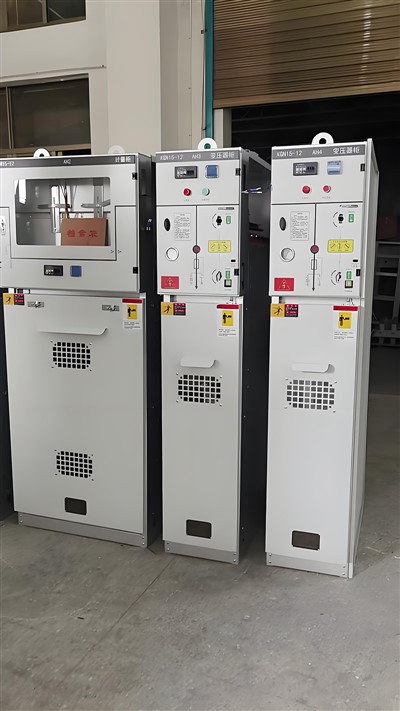
Let me start by setting the scene from my own experience—last quarter, we had a customer panic because their custom 32kV distribution box was stuck at a cross-dock in a small town, and they couldn’t figure out how to get it the 400 miles to their construction site without risking damage. As a high-voltage distribution box supplier, I’ve spent over a decade solving transport problems for clients across industries: renewable energy, commercial construction, municipal utilities, and industrial manufacturing. Transporting these units isn’t just moving a big metal box—it’s protecting critical electrical components that can cost tens of thousands of dollars to repair or replace, and putting everyone involved on site at risk if something goes wrong. High-Voltage Distribution Box

First, you can’t treat a high-voltage distribution box like a standard palletized load. These units are engineered to house circuit breakers, transformers, busbars, and insulation materials that are sensitive to vibration, moisture, and improper lifting. I’ve seen a client skip professional rigging and use a standard forklift, only to bend the mounting flange that holds the main busbar—resulting in a two-week delay and a $12,000 repair bill. So step one: assess the box’s specifications before you book any transport. Every box leaves our facility with a spec sheet that includes weight (usually 2,000 lbs to 12,000 lbs, sometimes more for large units), dimensions, center of gravity, and special handling notes. For example, if a box has external surge protection capacitors that protrude 18 inches from the main frame, you need to account for that when determining trailer clearance—standard 53-foot dry vans have a 13’6” height limit, but protruding parts can push the total height to 14’6”, which will require a lowboy trailer with adjustable decks.
Next, choose the right transport mode. Most of our standard orders go via flatbed truck, but there are exceptions. If the delivery is rural with narrow roads or low overpasses, a step-deck trailer is better—its lower deck gives more clearance for tall units, and it’s easier to maneuver on tight corners. For units over 15,000 lbs, we always insist on a lowboy trailer with a hydraulic ramp; trying to lift an oversized box with a standard flatbed crane can cause uneven stress on the frame. We also work with rail for cross-country shipments of multiple boxes, but only if the customer is okay with longer lead times (rail adds 3-5 days to delivery, but cuts costs by 20-30%). The biggest mistake I see here is customers picking the cheapest option without checking route constraints. Last year, a solar company booked a flatbed to pick up two 8,000-lb boxes from us, only to find the route they chose had a 14’ overpass that the boxes (with all external wiring, which we didn’t remove for transport) would not clear. They had to reroute, paying an extra $1,800 in detour fees—cost that could’ve been avoided with 10 minutes of route planning.
Then, lifting and securing the box correctly. This is non-negotiable. At our facility, we use only certified rigging companies that specialize in electrical equipment, not general construction. We provide specific lifting points on every box—they’re marked with yellow paint and clearly labeled on the spec sheet—because lifting from the wrong spot can warp the enclosure or damage internal components. For example, a 5,000-lb box has two 2-ton lifting lugs on the top frame; trying to lift it from the bottom with straps will crush the base, which houses the main breaker. Once lifted, the box has to be secured with heavy-duty chains or straps, not rope or bungees. I’ve seen a customer use ¼-inch rope to secure a unit during a rainy transport, and by the time it arrived, the rope had frayed, the box had shifted 12 inches on the trailer, and the front door had broken open, letting water seep into the insulation. The fix? We had to replace the entire internal insulation system, adding another $8,500 in costs and a three-week delay. Also, we always recommend using corner protectors on the box’s corners to prevent scratches that can lead to rust, especially if the transport will take longer than 2 days.
Moisture and temperature control are another key factor. High-voltage components don’t play well with condensation or extreme temperatures. If you’re transporting a box during winter, temperatures below 32°F can make insulation materials brittle—we advise keeping the box in an enclosed trailer with a small heater to maintain at least 40°F, especially for units that are going directly to cold-weather sites without indoor storage. For summer transport, especially in humid climates, a dry van with dehumidifiers is better; if you use an open flatbed, even a light rain can get inside the enclosure if the door isn’t sealed properly. Our shipping team always reminds drivers to secure the door latches tightly and cover the top of the box with a waterproof tarp that’s weighted down at the edges—never just draped over the top, which can flap loose and let water in during a storm.
Oversized and overweight units come with extra regulations. If your distribution box is over 12’ tall, 8’ wide, or 80,000 lbs total weight, you need to get oversize load permits for every state you’re driving through. Each state has its own rules—some allow oversize loads only during daylight hours, others require a pilot car to lead the way, and some have weight limits on certain bridges. We handle permit applications for our regular clients because it’s a tedious process, but we always tell first-time buyers to budget an extra $500-$1,500 for permits and pilot cars. Last year, a municipal utility tried to get their own permits for a 32kV box that was 14’ tall; they forgot to check a state regulation that requires over 13’ loads to have two pilot cars, not one. They got pulled over in Ohio and had to wait 6 hours for a second pilot car, which pushed their delivery back a full day.
Finally, post-transport inspection is critical. The box doesn’t just get dropped off and unloaded—you have to check it before you sign for delivery. Our drivers always bring a pre-inspection checklist that includes checking for dents on the enclosure, loose wiring, signs of moisture inside, and proper alignment of the breaker mechanisms. We once had a client sign for a box without inspecting it, only to find 3 days later that a loose bracket had damaged the busbar during transport. Because they signed the delivery receipt, the carrier refused to take responsibility. That’s why we train all our customers to do a walkaround before signing—even if it takes 15 minutes. If you spot damage, note it on the bill of lading and take photos before the driver leaves.
As someone who’s seen firsthand how bad transport can turn a good project into a nightmare, I’ll say this: when you’re dealing with high-voltage distribution boxes, cutting corners on transport almost always ends up costing more in the long run. At our company, we don’t just sell units—we work with clients to coordinate every step: choosing the right trailer, arranging permits, scheduling rigging, and even coordinating post-delivery inspections. If you’re planning a project that needs a high-voltage distribution box, whether it’s for a commercial build, renewable energy farm, or municipal upgrade, let’s talk. We can walk through your specific needs, answer all your questions about transport, and make sure your unit arrives on time and in perfect condition.
If you’d like to learn more about our high-voltage distribution boxes or discuss transport options for your project, feel free to connect with our sales team for a detailed consultation.
Distribution Chamber References
- National Electrical Manufacturers Association (NEMA). “Transportation and Handling Guidelines for Low, Medium, and High-Voltage Electrical Equipment.” 2021.
- Occupational Safety and Health Administration (OSHA). “Rigging and Material Handling Standards for Heavy Electrical Equipment.” 2022.
- Federal Motor Carrier Safety Administration (FMCSA). “Oversized Load Permitting and Route Planning Requirements.” 2023.
- Institute of Electrical and Electronics Engineers (IEEE). “Care and Handling Guidelines for Medium-Voltage Switchgear During Transit.” 2020.
- High-Voltage Equipment Suppliers Association (HVESA). “Best Practices for Transporting Distribution Box Units.” 2022.
Anhui Nanxian Electric Co., Ltd.
With abundant experience, we are one of the most professional high-voltage distribution box manufacturers and suppliers in China. We warmly welcome you to buy advanced high-voltage distribution box for sale here and get quotation from our factory. All customized products are with high quality and low price.
Address: Factory Unit 03-2, Building 21, Feidong Yinfeng Industrial Park Co., Ltd., Northeast Corner of Manquan Road and Changle Road, Hefei Circular Economy Demonstration Park, Feidong County, Hefei City, Anhui Province.
E-mail: 541580567@qq.com
WebSite: https://www.nxelepower.com/
