Hey there, if you’ve ever dug into Brinell hardness testing—whether you’re a machinist, materials engineer, or someone just curious about how we measure how “hard” metal really is—you’ve probably stumbled on this question at some point: What’s the maximum diameter a Brinell indenter can be? And since I’ve been running a Brinell hardness testers supplier for over a decade, I’ve fielded this exact question from shop floor teams, quality control leads, and even university lab grad students more times than I can count. So let’s break this down like we’re shooting the breeze in a shop, not delivering a stuffy textbook lecture. No confusing jargon dumps, I promise. Brinell Hardness Testers
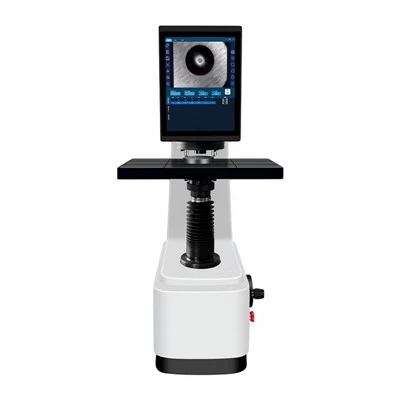
First, let’s start with the basics to make sure we’re all on the same page. Brinell testing works by pressing a hard little ball (that’s the indenter!) into a test material with a specific amount of force, holding it there for a set time, then measuring the diameter of the dent left behind. The number you get—Brinell Hardness Number, or BHN—depends directly on how big that indenter is and how much force you use. It’s like how you’d press a marble into playdough vs. a pin: the bigger ball makes a wider dent, so you can’t use the same size ball for every material.
Now, back to that max diameter question. A lot of people guess it’s just some random big number, but nope—it’s tied straight to the standards we all follow here, right? For Brinell testing, the indenter is almost always made of two things: either tungsten carbide (which is super tough, doesn’t deform easy) or, for really super hard materials, a diamond. Wait, but diameter? The standard max we deal with every day is 10 millimeters. That’s it. Wait, why 10mm? Let’s unpack that.
You see, Brinell testing was invented back in 1900 by a Swedish engineer named Johan Brinell, and the original standard he used was a 10mm tungsten carbide ball, paired with a 3000 kg force load. That combo is still the “go-to” for most heavy-duty materials like steel, cast iron, aluminum alloys, stuff that sees real use in construction, automotive, mining—things that need to hold up to stress. Over the years, standards like ASTM E10 and ISO 6506 (the two big ones everyone in this space follows) locked that in as the maximum allowable diameter for Brinell indenters. Let’s be clear: you won’t find a 12mm or 15mm Brinell indenter on the market that’s approved for standardized testing. Why the hard limit at 10mm?
A couple of reasons, honestly. First, consistency. The whole point of standardized hardness testing is that if I test the same chunk of steel on a machine in my shop and a machine in your shop, we get the same BHN number. If you start using a bigger indenter, the math behind calculating BHN (it’s (Force)/(Surface area of the dent) — remember that?) gets wonky. The surface area formula for a spherical dent only works reliably when the ball diameter is within a specific range tied to the force load. Push that diameter over 10mm, and the error margin jumps way too high for test results that actually mean something for quality control.
Second, durability. A Brinell indenter is a precision part, right? It has to be perfectly round, free of any nicks or scratches, because even a tiny flaw will throw off your results. A 10mm tungsten carbide ball is already a beast—tungsten carbide is almost as hard as diamond, so it can handle 3000 kg of force (that’s like the weight of a small car!) over and over without deforming. If you tried to make a 15mm indenter, you’d need a way bigger chunk of tungsten carbide, which is way more expensive, but also—its own weight becomes a problem? Wait, no, more like: the bigger the ball, the more likely it is to get damaged under load, especially if you’re testing super hard materials. Imagine pressing a bowling ball into metal vs. a marble—even if both are hard, the bowling ball is more likely to chip if the metal has tiny inclusions, right? Same idea here.
Wait, but hold on—are there any exceptions? I’ve had a customer come to me once asking about a 12mm indenter, working on some giant cast iron parts for wind turbine foundations, I think. Let’s be real, Brinell testing is flexible for special applications, as long as it’s not for standardized results. Some companies will use a bigger indenter for “rough” or “comparative” testing, like checking if a batch of cast iron is consistent before sending it out for full testing. But that’s not a true Brinell test—it’s a variation, and no one will take that number as an official hardness value. The max diameter for a true, standardized Brinell indenter? Still 10mm. Full stop.
Now, as a supplier of Brinell hardness testers, I can tell you this: 90% of the time, when someone is picking an indenter, they’re choosing 10mm. The rest are 5mm, 2.5mm, or 1mm, paired with smaller force loads for softer materials like aluminum, brass, or even plastics (wait, yeah, we do Brinell testing on plastics too sometimes, for things like packaging or mold parts). The 10mm indenter is the workhorse of the industry. I’ve sold hundreds of these over the years, and I’ve seen them hold up for years even in 12-hour-a-day machine shop environments.
Let me also clear up a common mix-up people have: Brinell indenters aren’t the same as Rockwell or Vickers indenters. Rockwell uses a tiny diamond cone or a 1/16 inch ball, way smaller. Vickers uses a diamond pyramid, no ball at all. So don’t confuse those sizes with Brinell—10mm is only for Brinell, and that’s the max. I once had a new machinist at a local shop order a bunch of 12mm indenters for his Rockwell tester, which is why I started writing this blog in the first place—helping folks avoid that kind of silly mistake.
Another thing: if you ever work with a testing lab, they’ll only have 10mm indenters for the standard 3000 kg load. That’s what the industry expects. If you show up with a non-standard indenter, you’ll get a weird look and probably have to explain why you’re not following the standard. It’s not that you can’t use a bigger one—it’s that the results won’t be valid for compliance, like if you’re testing parts for aerospace or medical applications, where you need to meet specific hardness specs.
Wait, let’s talk about why tungsten carbide is the material of choice for that 10mm indenter, too. Diamond indenters are for super hard materials like tool steel, but diamond is way more expensive, and the 10mm diamond ball? That’s a rare beast. Most 10mm indenters are tungsten carbide, which is the perfect balance of hardness, toughness, and cost. We stock thousands of these in our warehouse, because they’re the most requested part we sell for our testers.
I’ve also had a customer ask, “Can I use a 10mm indenter for soft materials?” Technically, yes, but you’d use a smaller force load, like 500 kg or 250 kg, so you don’t dent the material too deep. That’s where the other indenter sizes come in—they let you adjust for different materials, so you get a nice, shallow, accurate dent. But the maximum size stays 10mm, no matter what.
Let’s get back to the “why” one more time, because it’s not just a random number. The Brinell test was designed to measure the average hardness of a material, right? The 10mm ball is big enough to average out any tiny surface irregularities or small inclusions in the metal. If you used a smaller indenter, like 1mm, a tiny flaw in the test material would throw off the dent measurement way more. The 10mm gives you a more representative sample of the entire part, which is why it’s so widely used for large, heavy parts like construction hardware, crane components, and industrial machinery parts.
As a supplier, I’ve seen first-hand what happens when people ignore the max indenter size. A few years back, we worked with a manufacturing plant that was making truck axles, and they tried using a 12mm indenter to speed up their testing. Their quality control team thought a bigger ball would make the dent easier to measure, so they could test parts faster. But when they sent a sample to a third-party lab for verification, the BHN number was 20 points lower than what their own machine was showing. That’s a huge difference—enough to make all their axles either too soft (which could fail on the road) or they’d have to rework parts unnecessarily, costing them thousands in scrap and delays. They switched back to 10mm indenters, and their results matched the lab’s within 2 points. Problem solved.
That’s the kind of stuff I don’t see in textbooks. As a guy who’s been in this business for years, I can tell you that the max indenter size isn’t just a line in a standard—it’s a rule that’s there because it works. It’s there to make sure your test results are reliable, consistent, and actually mean something. If you’re testing materials that need to meet industry standards (and let’s be real, most of the parts out there do), you can’t mess with that 10mm limit.
Now, I know a lot of you reading this might be thinking, “But what if I have a special case?” Maybe you’re testing a super thick, super homogeneous material, or a custom part that’s not covered in the standard. For those cases, we can talk. But even then, the maximum indenter size for a calibrated, valid Brinell test is still 10mm. Any bigger, and you’re outside the standards that everyone in this industry relies on.
At the end of the day, if you’re shopping for Brinell hardness testers or replacement indenters, don’t overcomplicate the max indenter size. Stick with 10mm for standard work, reach for smaller sizes for soft materials, and don’t try to go bigger just because it sounds like it would work better. Trust the standards—they’ve been around for over a century for a reason.
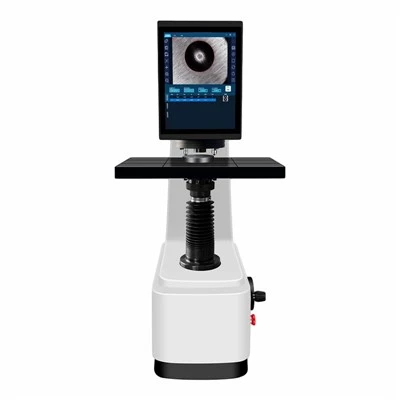
If you’re looking to upgrade your testing setup, need replacement indenters for your current machine, or have questions about which indenter size is right for your specific application, we’re here to help. We’ve got a full line of Brinell hardness testers, precision indenters in all the standard sizes, and our team knows this stuff inside and out. Hit us up to chat through your needs—no salesy pitches, just straight answers from folks who’ve lived and breathed Brinell testing for years.
References
Rockwell Hardness Testers ASTM E10-21, Standard Test Method for Brinell Hardness of Metallic Materials
ISO 6506-1:2014, Metallic materials — Brinell hardness test — Part 1: Test method
J. Brinell, “A Method for Determining the Hardness of Metals,” 1900, Teknisk Tidskrift (Swedish Journal of Technology)
Laizhou Metallographic Testing Equipment Co., Ltd.
As one of the leading manufacturers and suppliers of brinell hardness testers in China, we have world-leading production equipment and strong manufacturing capabilities. Please rest assured to wholesale customized equipment at competitive price from our factory. Welcome to contact us for quotation.
Address: TENG GE PO ZI VILLAGE, HU TOU YA TOWN, LAIZHOU CITY, YANTAI SHANDONG, CHINA
E-mail: nicolecheng@lzmetaltest.com
WebSite: https://www.metalnesscn.com/
