If you’ve ever spent time on a job site, a garage, or even a weekend DIY project, you know impact wrenches are the workhorses for loosening stubborn lug nuts, tightening structural bolts, or assembling heavy machinery. But here’s a mistake a lot of people make: grabbing any air compressor off the shelf and assuming it’ll pair with an impact wrench. I’ve seen first-hand how that choice can turn a smooth job into a headache—either your compressor sputters mid-bolt, runs nonstop to keep up, or costs way more than it needs to. As someone who’s worked in the air compressor supply space for over a decade, helping everyone from professional mechanics to small construction teams find the right gear, I can tell you the “best” compressor for an impact wrench isn’t a one-size-fits-all model. It boils down to matching your tool’s needs to your work, space, and budget. Air Compressor
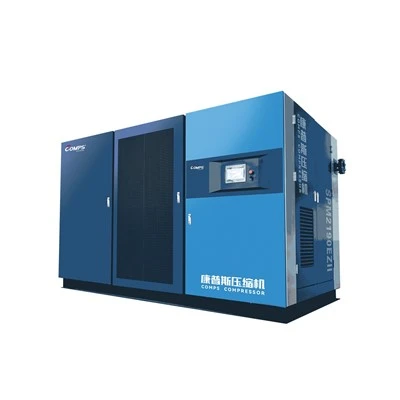
First, let’s cut through the jargon that clogs a lot of buying guides. The two numbers that actually matter here are cubic feet per minute (CFM) and pounds per square inch (PSI). Your impact wrench doesn’t care about how big the compressor’s tank is, exactly—it cares about steady airflow to avoid power drops mid-use. Most common impact wrenches fall into three categories: ½-inch drive (the most popular for general use), ¾-inch drive (for heavy construction), and 1-inch drive (for industrial applications). Let’s break each down, because a ½-inch wrench needs totally different airflow than a 1-inch one.
A standard ½-inch air impact wrench, the kind you’ll see at a local mechanic’s shop or used for changing car tires, usually runs at a maximum of 90 PSI. But its CFM requirement? Most manufacturers rate these wrenches at 3 to 5 CFM at 90 PSI. If your compressor only puts out 2 CFM at that pressure, it’ll work—until you’re torquing a tight bolt and the tool loses power, forcing you to wait for the compressor to catch up. That’s not just annoying; it slows down every job. For most home mechanics or DIYers working on cars, a 10 to 20-gallon portable electric compressor that delivers 4 to 6 CFM at 90 PSI is perfect. It’s light enough to move around a garage, runs quieter than gas-powered models, and has enough tank capacity to power a single ½-inch wrench without constant cycling.
Now, upgrade to a ¾-inch drive impact wrench, the go-to for construction workers lifting heavy equipment or assembling large structural beams. These tools need a lot more oomph: they run at 90 PSI, but their CFM requirement jumps to 6 to 8 CFM at 90 PSI. A 20-gallon tank won’t cut it here. I’ve had construction teams come to me with a 20-gallon compressor that couldn’t keep up with their ¾-inch wrench, and by the end of a full day, the compressor was running 10 minutes out of every 15, heating up and risking damage. For this use case, you need a compressor with a 30 to 60-gallon tank, delivering 7 to 9 CFM at 90 PSI. If you’re working on a small crew and only use one wrench at a time, a horizontal electric or gas-powered stationary model works great. But if you’re moving between job sites, a wheeled portable 30-gallon gas compressor is worth the extra cost—it has enough airflow to keep up and doesn’t rely on a power outlet, which is a big plus for remote worksites.
Then there’s the 1-inch drive impact wrench, the industrial workhorse used for heavy equipment repair, mining, or large-scale construction. These tools can require up to 10 CFM at 90 PSI, and they need consistent airflow, not just a burst from a tank. A standard 60-gallon compressor will struggle here; I’ve seen teams try to use a 60-gallon model for a 1-inch wrench and end up with the compressor shutting down from overuse within an hour. For this level of tool, you need a two-stage air compressor, the kind built for heavy-duty continuous use. Two-stage compressors have two compression pumps instead of one, so they deliver more stable airflow and can handle 10 to 12 CFM at 90 PSI. Tank size here should be at least 60 gallons, and if you’re running multiple 1-inch wrenches at the same time (common on assembly lines), you’ll want to go up to 80 or 120 gallons. These are bigger, stationary units, but they’ll power your tools all day without pausing, no overheating, no lost torque mid-bolt.
Beyond CFM and PSI, there are a few more factors you can’t ignore, and they tie directly to how you work. Let’s talk about power source first. Electric compressors are great for garages or job sites with easy access to power; they’re quieter, require less maintenance, and don’t emit fumes. But if you’re working in a remote area, like a farm or a construction site with no electricity, a gas-powered compressor is non-negotiable. The tradeoff? Gas models are louder, need oil changes and tune-ups, and emit exhaust, so they’re not ideal for enclosed spaces like a home garage. If you’re working in a tight space, look for a quiet air compressor, rated at 70 decibels or lower—way quieter than a standard gas compressor, which can hit 90 decibels (as loud as a lawnmower). That’s a big deal for anyone who’s spent a day on a job site with constant loud noise; your ears will thank you, and your teammates will too.
Tank size is another point of confusion. A lot of people think a bigger tank automatically means more power, but that’s not true. A 20-gallon tank attached to a compressor that only puts out 3 CFM will run out of air faster than a 10-gallon tank on a 5 CFM compressor. The tank just stores air; the CFM is what delivers the airflow your impact wrench needs. For example, if you’re using a ½-inch wrench, a 10-gallon tank might work for quick jobs like changing a single tire, but a 20-gallon tank will let you do four or five tires before the compressor kicks in again. If you’re running multiple tools (say, an impact wrench and an air ratchet), you’ll need to add up their CFM requirements and make sure your compressor can handle that total. Most of the time, for a single impact wrench, the tank size is secondary to CFM, but it’s a nice add-on for longer jobs.
Maintenance is something a lot of buyers overlook, but it will make or break your compressor’s lifespan. I’ve seen too many people buy a cheap compressor, skip oil changes, and have it die after a year. For electric models, check the oil every 500 hours of use, replace the air filter regularly, and drain the tank’s moisture every time you use it—moisture builds up and can damage your impact wrench’s internal parts over time. For gas models, add a spark plug check and fuel filter change every season, especially if you store it for months between jobs. If you’re not comfortable doing maintenance yourself, look for compressors with easy-to-access parts and local service options—something I always recommend to small teams who don’t have a dedicated mechanic on staff.
Now, let’s talk about common mistakes I see buyers make all the time. First, buying too small a compressor to save money. A $200 compressor that can’t power your ¾-inch wrench will end up costing you more in the long run: you’ll waste time waiting for it to catch up, and you might have to replace it in a year anyway. Second, buying too big a compressor for your needs. If you’re a DIYer only changing tires on weekends, a 120-gallon two-stage industrial model is overkill—it’s heavy, expensive, and you’ll never use its full capacity. The sweet spot is matching your compressor to your most demanding tool. If your primary tool is a ½-inch wrench, don’t buy a 1-inch compressor; if your main tool is a 1-inch wrench, don’t skimp on the two-stage model.
Another mistake: ignoring PSI fluctuations. Your impact wrench is rated for a maximum PSI, and running it at lower PSI will reduce its torque. Most compressors have a regulator to adjust PSI, so make sure you set it to the tool’s maximum (usually 90 PSI) to get the full power of your wrench. If your compressor can’t maintain 90 PSI under load, that’s a sign it’s too small for your tool, and you’ll need to upgrade.
Let’s put this all together with real-world examples. Last year, a local mechanic came to me with a problem: he was using a 15-gallon electric compressor for his ½-inch impact wrench, and every time he worked on a fleet of cars, the compressor would kick off mid-job, making him wait 2 minutes for it to recharge. He didn’t need anything fancy, just enough airflow to keep up. We ended up selling him a 20-gallon electric compressor that delivers 5 CFM at 90 PSI—now he can do 8 tires in a row without the compressor needing to cycle nonstop, cutting his job time by almost half. Another example: a construction crew working on a bridge project came to me complaining their 50-gallon gas compressor couldn’t keep up with their ¾-inch wrenches on remote parts of the site, no power outlets available. We swapped it for a 30-gallon two-stage gas compressor, delivering 8 CFM at 90 PSI, and they told me later they finished their bridge installation two days ahead of schedule because they didn’t have to wait for air anymore.
At the end of the day, the best air compressor for your impact wrench depends on three simple things: what size impact wrench you use most, where you’ll be using it (garage vs. remote job site), and how many tools you run at once. There’s no universal “best” model, but there’s a best model for your specific needs.
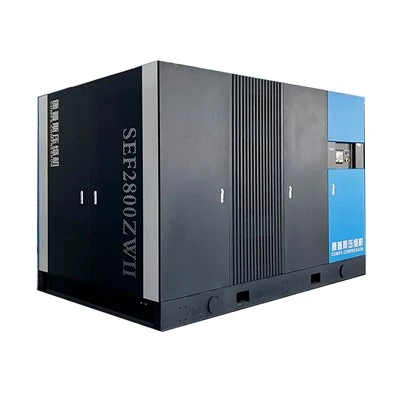
If you’re still not sure which compressor fits your impact wrench or work style, we’re here to help. We’ve got a range of portable and stationary compressors, from small electric models for home DIYers to heavy-duty two-stage units for industrial use, all tested to match the CFM and PSI requirements of popular impact wrenches. We can help you calculate your exact airflow needs, answer questions about maintenance, and make sure you get a compressor that works as hard as you do. Reach out to our team to start a conversation about finding the right air compressor for your impact wrench, no pressure, no hassle.
Electric Air Compressor References:
- Compressed Air Handbook, Air & Waste Management Association, 2021.
- "Air Impact Wrench Performance Requirements", Tool Manufacturers Institute, 2022.
- Stationary Air Compressor Maintenance Guidelines, Compressed Air and Gas Institute, 2020.
- "Portable Compressor Sizing for Construction Applications", Journal of Construction Equipment, 2023.
Comps Compressor (Shijiazhuang) Co., Ltd.
As one of the most professional air compressor manufacturers and suppliers in China, we’re featured by quality products and good price. Please rest assured to buy customized air compressor made in China here from our factory. Also, pricelist is available.
Address: No.172, Nanche Road, Shijiazhuang Equipment Manufacturing Industrial Park, Luancheng District, Shijiazhuang City, Hebei Province
E-mail: kpsxsb@163.com
WebSite: https://www.comps-compressor.com/
