If you’re in the market for semi-trailers, you’ve probably spent hours scrolling through inventory, listening to sales pitches, and trying to sort out what actually works for your business. As someone who’s been supplying semi-trailers to small fleets and large logistics companies alike for over 12 years, I’ve seen firsthand how wrong a choice between flatbed and enclosed semi-trailers can go. I’ve had a customer who leased three flatbeds thinking they’d cut costs, only to end up replacing $18,000 worth of damaged steel coils that had rusted in unexpected rain. I’ve also had a startup skip enclosed trailers to save on upfront costs, only to lose a $50,000 contract because they couldn’t guarantee their electronics shipments wouldn’t get stolen off an open trailer at a stop. These aren’t edge cases—they’re the kinds of decisions that define your bottom line, and the differences between flatbed and enclosed semi-trailers run way deeper than their obvious open vs. closed design. Semi-Trailer
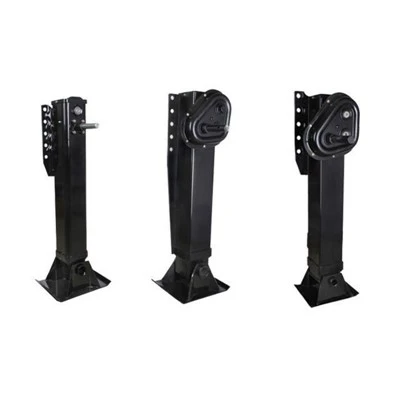
First, let’s break down the core design distinctions, because that’s where every other difference stems from. A flatbed semi-trailer is exactly what it sounds like: a rectangular, open deck, usually made of steel or aluminum, with no sides or roof. The most common sizes we supply at my shop are 48 feet and 53 feet long, with load capacities ranging from 40,000 to 48,000 pounds, depending on the materials used for the frame and deck. They have stake pockets along the sides for tying down tarps, gooseneck or slider axles to adjust weight distribution, and sometimes removable side rails for extra versatility. Enclosed semi-trailers, on the other hand, are fully enclosed: they have rigid side walls, a roof, and rear doors that lock, and they’re built with a frame that supports the full enclosure, not just a deck. Most are also 48 to 53 feet, with capacities around 45,000 to 48,000 pounds, but some smaller box trailers exist for last-mile deliveries, which is a whole separate subset.
But the design differences aren’t just structural—they impact every part of your operations, from load type to labor costs to compliance. Let’s start with the most practical split: what you can carry. Flatbed trailers are built for loads that are too big, too bulky, or too awkward to fit inside an enclosed space. Think construction materials: steel girders, concrete blocks, lumber, piping, heavy farm equipment like tractors or harvesters, oversized machinery parts, and even shipping containers (we often attach container twist locks for that exact purpose). Their open deck means you can load and unload from the sides, front, or back—no need to navigate a loading dock or a narrow warehouse door. That flexibility is a huge win for industries that move irregular, non-palletized goods. Enclosed trailers, though, are made for cargo that needs protection from the elements, theft, or damage. That includes high-value goods: electronics, furniture, clothing, medical supplies, art, and retail inventory. They’re also the go-to for palletized goods that need to stay dry or secure, which is why you’ll see them hauling Amazon or Walmart truckloads across the country.
Next, let’s talk about labor and access, because that’s where a lot of new fleet owners overlook hidden costs. Loading a flatbed isn’t just hooking up a trailer and driving—you need specialized equipment most of the time. For heavy items, you’ll need a crane, forklift, or boom truck to lift loads onto the open deck, and you’ll have to invest in tie-downs, straps, and tarps to secure everything. If it rains, you have to stop and tarp the load, which adds time to your route and exposes your cargo to damage if you miss a spot. We see this all the time: a driver will book a load for a 6-hour trip, only to spend 45 minutes re-tarping during a thunderstorm, making them late and costing them detention fees. Enclosed trailers cut out almost all of that extra labor. You can load them with a standard forklift inside a warehouse, no need for tarps or external tie-downs (most pallets are shrink-wrapped anyway), and you don’t have to pause for weather-related load securing. The rear doors lock, so once a load is inside, it’s secure until it reaches its destination. That saves time on the road and reduces labor costs per trip, which adds up fast over a year.
Then there’s the theft and damage risk, which is one of the biggest differentiators for shippers. Open flatbeds are a target for theft because most loads are visible from the highway. A $5,000 tire can be unbolted in 60 seconds from an unsecured flatbed, or a bundle of lumber can be cut and stolen during an overnight stop. We’ve even had customers whose loads of aluminum siding were siphoned off in the middle of a drive, because there’s no barrier to stop someone from climbing onto the deck. Damage from the elements is another big one: even a light rain can warp wood, rust steel, or ruin electronic components, and there’s no way to protect a flatbed load once you’re on the road. Enclosed trailers eliminate almost all of these risks. The walls and roof block rain, snow, and UV rays, so your cargo stays in the condition it left the warehouse. The locked doors mean only designated drivers can access the load, and if you have a high-value cargo, you can even add extra security features like door alarms or interior cameras that sync to a fleet manager’s phone. That doesn’t just save you from lost goods—it saves on insurance premiums too. Most commercial insurance companies charge less for enclosed trailers because the risk of theft and weather damage is lower. We’ve seen customers pay 15-20% less annually on their insurance just by switching from flatbeds to enclosed for their high-value loads.
Fuel efficiency and maintenance are two more areas that people don’t compare enough. A flatbed trailer has less aerodynamic drag than an enclosed trailer, right? Wait, no—actually, that’s a common myth. Wait, let’s correct that: a basic, empty flatbed has a lower profile and less wind resistance than a tall enclosed trailer, but when a flatbed is loaded, you’re adding irregular, protruding loads that create way more drag than a closed, streamlined trailer. We track our customers’ fuel data, and on average, a fully loaded enclosed semi-trailer gets about 5-7 miles per gallon (mpg), while a fully loaded flatbed with a tall, protruding load gets 3-5 mpg. That’s a 20-40% difference in fuel costs per mile, which adds up to thousands of dollars a year for every trailer. Maintenance is another factor: enclosed trailers have more parts to maintain—the walls, roof, doors, and locking mechanisms—but those parts are built to protect the cargo, so they hold up better to road debris and weather. Flatbeds, on the other hand, have open decks that are exposed to constant road salt, mud, and impact from loads shifting. We regularly replace flatbed decks every 7-10 years, while enclosed trailer bodies last 12-15 years, because the closed structure shields the frame from corrosion. That means lower long-term replacement costs for enclosed trailers, even if their initial maintenance feels higher upfront.
Compliance and regulatory rules are another often-overlooked difference, especially if you’re crossing state lines or international borders. Flatbed trailers have different weight and dimension limits than enclosed trailers, depending on the state. For example, some states allow flatbed loads to extend 4 feet beyond the rear of the trailer without extra permits, while enclosed trailers can only extend 2 feet, or require a special overhang permit. Flatbeds also have stricter rules about load securing: federal regulations require that all loads be tied down with enough straps to prevent shifting, and if a load is taller than the trailer’s sides, you have to add extra markers or flags to alert other drivers. Enclosed trailers don’t have those same load-securing rules, because the walls contain the cargo. For international shipments into Canada or Mexico, flatbeds often require special permits for oversized loads, while enclosed trailers are treated as standard cargo carriers, making cross-border logistics easier. That can save you time at border crossings, where delays add up to hundreds of dollars a day in detention fees.
Now, let’s talk about who each trailer is for, because there’s no one “better” option—it depends on your specific business. If you’re a construction company hauling steel, lumber, or heavy equipment, flatbeds are non-negotiable. If you’re a farm moving hay, grain bins, or tractors, flatbeds give you the flexibility you need to load without a warehouse. Even retailers that occasionally move oversized appliances (like refrigerators or couches) will keep a flatbed in their fleet for those one-off loads. But if you’re an e-commerce shipper moving apparel, electronics, or furniture, a moving company, or a medical supply firm hauling temperature-sensitive vaccines or equipment, enclosed trailers will save you more money in the long run. If you’re a small startup just getting off the ground, you might be tempted to go with cheaper flatbeds to cut initial costs, but I always tell them to test a single enclosed trailer for 6 months. We had a last-mile delivery company in Dallas that tried 5 flatbeds for 3 months, only to lose 2 small cargo theft claims and pay $12,000 in weather-related damage. They switched to 2 enclosed trailers, and within a year, they’d recouped the extra cost of the trailers and saved $18,000 in insurance and damage fees.
The biggest mistake I see buyers make is assuming one size fits all. Many fleets end up needing both: we often sell customers a mix of flatbeds for construction and oversized loads, and enclosed trailers for their regular high-value cargo. That hybrid approach lets you take advantage of the flexibility of flatbeds when you need it, and the security and fuel savings of enclosed trailers for other trips. We also offer custom modifications for both, so if you have a niche need—like a flatbed with a removable roof for hauling tall equipment, or an enclosed trailer with temperature control for food shipments—we can build it to your specs.
At the end of the day, choosing between flatbed and enclosed semi-trailers comes down to your cargo, your route, and your long-term costs. It’s not just about upfront price—it’s about how much you’ll spend on fuel, insurance, labor, and repairs over the life of the trailer. If you’re ready to build a fleet that fits your specific needs, we can help you evaluate your current operations, test different trailer types, and find solutions that save you money and reduce risk. Whether you’re a small business with 2 trucks or a large fleet with 50, we’ve got the experience to guide you through every step.
If you’re ready to discuss your semi-trailer needs and find the right fit for your operations, reach out to our team to set up a consultation. We’ll walk you through our inventory, share customer case studies, and answer all your questions.
Concrete Mixer Truck References:
- American Trucking Associations. (2022). Semi-Trailer Type Specifications and Operating Costs. American Trucking Associations.
- Federal Motor Carrier Safety Administration. (2021). Load Securing Regulations for Commercial Semi-Trailers. U.S. Department of Transportation.
- Trailer Builders & Repairers Association. (2023). Long-Term Maintenance and Lifespan of Flatbed vs. Enclosed Semi-Trailers. Trailer Builders & Repairers Association.
- National Motor Freight Traffic Association. (2022). Cargo Protection Requirements for High-Value and Temperature-Sensitive Shipments. National Motor Freight Traffic Association.
Jining Dafu Machinery Sales Co., Ltd.
As one of the most professional semi-trailer suppliers in China, we’re featured by quality products and low price. Please rest assured to wholesale bulk cheap semi-trailer from our factory. We also accept customized orders.
Address: Room 1-115, Building 7, Luxinan Auto Parts City, Qiantongdian Village, Quanpu Town, Liangshan County, Jining City, Shandong Province
E-mail: jiningdafu@163.com
WebSite: https://www.dafumachinery.com/
