If you’re working in industries like oil & gas, chemical processing, or water treatment, you’ve probably heard people rave about Fisher valves more times than you can count. But when it comes to specific use cases, there’s one workhorse that stands out way more than most: the Vee-Ball Fisher valve. As someone who’s been supplying these valves for over seven years now, I’ve seen first-hand how they’re not just another piece of hardware—they’re the backbone of so many operations where precision and reliability are non-negotiable. Today, let’s break down exactly what makes this valve unique, the real-world applications that rely on it, and why it’s such a no-brainer for teams that can’t afford downtime. Fisher Ball Valve

First, let’s cut through the jargon a little. A lot of people mix up Vee-Ball valves with other rotary valves, but here’s the big difference: instead of a full round ball, it has a sharp, V-shaped notch cut right through the center. That notch isn’t just for show—it’s the secret sauce that gives this valve unmatched control. Most folks I talk to used to gate or globe valves before switching to Vee-Balls, and their biggest complaint was poor flow regulation, especially at low percentages. You’d open a globe valve a quarter turn, and the flow would either jump way too high or drop to nothing, no middle ground. The V-notch changes that entirely: as the ball starts to open, that sharp edge slices through the flow, creating a proportional, linear (or close to linear) curve between the valve’s opening and the fluid flow rate. That means you can dial in exactly how much liquid or gas you want moving through your pipeline, no guesswork required.
Now, let’s get to the applications, because that’s why you’re here. I’ve split these into the sectors I deal with most daily, so you can see how this valve fits into different workstreams.
Starting with oil and gas—this is where Fisher Vee-Ball valves got their start, let’s be honest. Upstream, midstream, downstream, it doesn’t matter; every part of the process needs a valve that can handle harsh conditions. Let’s talk about frac operations, for example. Fracking uses a mix of water, sand, and chemicals that’s super abrasive—way harder on valves than plain oil or gas. The Vee-Ball’s design is perfect here because the rotating action of the ball self-cleans any debris that gets trapped between the ball and the seat. I’ve had customers tell me that before switching to Fisher Vee-Balls, they were replacing valves every two weeks because sand would get stuck and cause leaks. Now, those same valves go six months between service checks, easy. Another big use in oil and gas is crude oil transfer and distillation. Distillation columns need precise flow control to separate different hydrocarbon fractions—gasoline from diesel, for example. If the flow is off, you get contaminated product, which costs tens of thousands of dollars in rework. The Vee-Ball’s linear flow response means operators can adjust the valve in real time without guessing, keeping those fractions pure. Even in storage tank farm applications, where you’re moving crude to and from ships or trucks, the valve needs to open wide to move large volumes quickly, but also close tightly to prevent spills. The Vee-Ball’s resilient seat (we use high-grade EPDM or PTFE depending on the fluid) gives bubble-tight shutoff, so no costly leaks here.
Next up: chemical processing. This is another sector that beats up valves constantly, because chemicals are corrosive, reactive, and often super high pressure. I work with a lot of chemical plant teams, and their number one priority is a valve that can handle aggressive materials without corroding or failing. Fisher Vee-Balls are built for this. We can spec the ball and seat from all kinds of materials—316 stainless steel for general chemicals, Hastelloy for acids like sulfuric or hydrochloric, even Monel for more reactive stuff. Let’s take a common chemical process: neutralization. You’re mixing an acid and a base to get a neutral solution, and if the pH is off, the whole batch is ruined. The Vee-Ball’s precise flow control lets you adjust the acid and base feed rates down to tiny increments, so you don’t overshoot the neutral pH. Another use here is in polymerization reactions, where you’re mixing monomers and catalysts to make plastics. Those reactions are exothermic, meaning they release a lot of heat, so you need exact flow of cooling water to keep the reaction from getting out of control. A globe valve might lag here, but the Vee-Ball’s fast response time (it rotates 90 degrees, instead of the globe’s linear motion) means you can adjust the cooling flow in milliseconds, preventing equipment damage. Oh, and one thing I always tell chemical teams: avoid valves that have hard-to-clean cavities. A lot of rotary valves have dead spaces where chemicals can get stuck and solidify, leading to contamination. The Vee-Ball’s design has almost no cavity—there’s nothing for material to collect in—so it’s way easier to clean, which is a huge deal for batch processes where you switch between different products.
Water and wastewater treatment is another huge market for these valves, and it’s one that people don’t talk about enough. Wastewater plants have to handle all kinds of stuff: raw sewage, sludge, chemicals for disinfection (like chlorine or alum), and even potable water for municipal systems. Let’s start with sludge handling. Sludge is thick, slimy, and full of solids—regular valves would clog up in a day. The Vee-Ball’s rotating action scrapes any sludge off the seat as it opens and closes, so clogs are almost unheard of. I had one customer at a municipal wastewater plant who used to have to shut down their entire treatment line once a week to unclog their old valves. Since switching to Fisher Vee-Balls, they haven’t had a clog-related shutdown in over two years. Another key use in water treatment is disinfection. When you’re adding chlorine to water to kill bacteria, you need to get the dosage exactly right—too little, and there’s a health risk; too much, and it tastes bad and violates EPA regulations. The Vee-Ball’s linear flow makes it easy to sync the valve with your chlorine dosing system, so you can adjust the amount of chlorine based on real-time water quality data (like pH or turbidity). Even in reverse osmosis (RO) systems, which purify water for drinking, the Vee-Ball controls the flow of brine (the waste product from RO) to make sure you’re getting as much purified water as possible without wasting too much. RO systems run 24/7, so the valve has to be reliable, and the Vee-Ball’s durability makes it perfect for that.
Wait, let’s not forget power generation. Both fossil fuel and renewable power plants rely on valves to work, and Vee-Balls are a staple here. In fossil fuel plants, you’re dealing with steam—high pressure, high temperature steam, sometimes up to 1,000 degrees Fahrenheit. Fisher makes Vee-Balls with metal seats that can handle those temps, and they can withstand the pressure changes without leaking. They’re used for controlling steam flow to turbines, which is critical for generating electricity. If the steam flow is off, the turbine can’t run at peak efficiency, costing the plant thousands in lost revenue. In renewable energy, like biomass plants or even geothermal, the same logic applies: you need valves that can handle the unique fluids (geothermal brine is super corrosive, remember) and adjust flow precisely. Even in hydroelectric plants, where you’re controlling water flow to turbines, the Vee-Ball’s quick opening and closing means you can adjust the flow fast if there’s a sudden change in water levels from rain or snowmelt.
Now, let’s talk about why these valves outlast other types in all these applications. A lot of people ask me, “Why not just use a ball valve?” and the answer is that a standard full-port ball valve is great for on/off, but bad for control. The V-notch is the game-changer here. The opening percentage vs. flow rate is almost linear—meaning if you open the valve 20%, you get 20% of the flow, 50% opening gives 50% flow, no weird spikes at low openings. That’s way more predictable than a butterfly valve, which has a very non-linear flow curve (you can open it 50% and get almost 90% flow, which is useless for precise control). Also, the Vee-Ball’s design means it’s less prone to cavitation. Cavitation is when bubbles form in fluid because of low pressure, then collapse, causing tiny explosions that eat away at valve parts. In high-pressure applications like oil and gas or power generation, cavitation is a huge problem, but the Vee-Ball’s flow pattern helps reduce those bubbles, so the valve lasts longer.
I should also mention that Fisher (the brand we supply) doesn’t cut corners on quality. All their Vee-Ball valves are tested in-house to meet exact standards—API 607 for fire safety, ANSI/ISA for control performance, whatever you need. We don’t sell knockoffs; these are the genuine Fisher valves that teams have trusted for decades. That trust isn’t just hype—when a valve fails, it’s not just the cost of the valve. It’s the downtime. I’ve had customers tell me that a single hour of downtime in a refinery can cost $100,000 or more. So buying a reliable valve that lasts two years instead of six months is a no-brainer, even if it costs a little more upfront.
Now, if you’re reading this and thinking, “This sounds like it fits my operation,” let me tell you what happens next. A lot of people try to guess what valve they need, but that’s where I come in. I’ll ask you a few quick questions: what fluid are you moving? What’s the pressure and temperature? Do you need tight shutoff, or just control? What size pipeline are you working with? Then I can recommend the exact Vee-Ball Fisher valve that’s right for you, no one-size-fits-all nonsense. We’ve got valves from 1-inch to 48-inch, for every industry and every condition. I know everyone says their valves are the best, but I’ve installed hundreds of these, and I’ve yet to see a job where a Fisher Vee-Ball didn’t work as advertised.
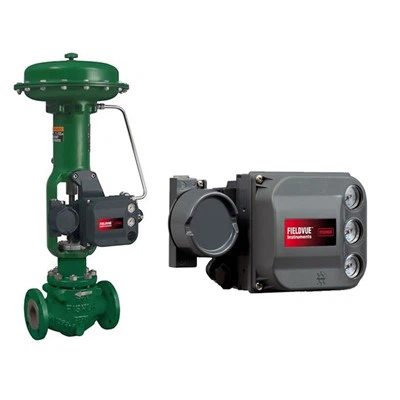
If you’re tired of valves that clog, leak, or can’t hold up to harsh conditions, let’s connect. We can work with you to get a quote, answer any questions you have, and even help with installation tips if you need them. No pressure, no sales pitches—just getting you the right valve to keep your operation running smoothly.
Valve Positioner Accessories References
- Fisher Controls International. (2022). Vee-Ball Valve Technical Specification Series. Emerson Industrial Automation.
- American Petroleum Institute (API). (2021). Standard 607: Fire Test for Pressure-Relieving and Related Valves. API Publishing Services.
- International Society of Automation (ISA). (2020). ISA-75.01.01: Flow Control Valves—General Considerations. ISA.
- Water Environment Federation (WEF). (2019). Valves and Piping for Wastewater Treatment Operations. WEF Press.
- U.S. Environmental Protection Agency (EPA). (2021). Chemical Dosing Control Systems for Municipal Water Treatment. EPA Office of Water.
Century Weiye (Dalian) Control Equipment Co., Ltd.
As one of the leading fisher ball valve manufacturers and suppliers in China, we warmly welcome you to buy discount fisher ball valve in stock here from our factory. If you have any enquiry about quotation, please feel free to email us. Quality products and reasonable price are available.
Address: 2205, Building 8, Red Star International, Ganjingzi District, Dalian City, Liaoning Province
E-mail: serena@valve-sjwy.com
WebSite: https://www.valve-sjwy.com/
