Hey everyone, let’s cut to the chase if you’re in the market for a cordless 125mm angle grinder—this isn’t the kind of tool you want to wing. I work as a supplier for these bad boys, and I talk to contractors, DIYers, and hobbyists every single day who are stuck between “this feels cheap” and “this costs more than my monthly grocery run.” So let’s break down what actually makes a 125mm cordless grinder the best, no sales fluff, just the real deal. 125mm Angle Grinder

First, let’s get the basics straight: 125mm is the sweet spot for this size, right? It’s not too big for tight corners, not too small for heavy-duty cuts (think rebar, tile, even thick deck lumber if you’re prepping for a build). Cordless is non-negotiable for most people—no dragging an extension cord that tangles around jobsite materials, no worrying about outlets miles away from where you’re working. But here’s the thing: not all 125mm cordless grinders are created equal. A lot of the budget options you see online will die mid-cut on a slab job, or the battery dies after 5 minutes, or the guard jiggles so much it’s a safety hazard.
Let’s talk motors first, because that’s the heart of any grinder. You want a brushless motor, no question. Brushed motors are cheaper, yeah, but they wear out fast—you’ll be replacing brushes every few months, and they suck up way more battery power for the same work. Brushless motors run cooler, last 3-5 times longer, and give you way more torque when you need it. I’ve seen guys buy a $80 grinder with a brushed motor that died after 3 jobs, while a $180 brushless one is still going strong a year later. For 125mm specifically, you need at least 10,000 RPMs—any less, and you’ll be fighting to cut through ½ inch steel, and the disc will wear out way quicker.
Batteries are the next big pain point. Cordless tools live or die by their batteries, and 125mm grinders need enough oomph to spin that 5-inch disc (wait, yeah, 125mm is 5 inches—just clearing that up for anyone who’s confused). You want 18V or higher? Wait, no—wait, 20V max is standard for most consumer tools, but if you’re doing heavy work, go for 40V or 54V. I know, that sounds fancy, but a 20V battery will cut maybe 10 feet of rebar before it’s dead, while a 40V can do 30 feet, same disc. Also, pay attention to amp-hour (Ah) rating: 5Ah is the minimum for serious use, 6Ah is even better. And make sure the battery is compatible with other tools you own—no one wants to buy a grinder and then have a random battery that only works for that one tool. A lot of brands have “system batteries” that work with drills, saws, grinders, etc.—that’s a huge win, so you don’t have to buy 10 different batteries for all your tools.
Now, safety features—can’t skip this, because grinders are dangerous if they’re not built right. First, the kickback protection. That’s the thing that stops the grinder from spinning out of your hand if the disc binds up. A lot of cheap grinders don’t have this, and I’ve had customers come back with scars because their $50 grinder didn’t catch when the disc got stuck on a pipe. Then there’s the adjustable guard—you want it to lock firmly, not wiggle every time you turn it. A loose guard is a recipe for the disc catching and flying back. Also, the spindle lock—easy to use, no fumbling with wrenches to change discs. Some grinders even have a soft start, which means it doesn’t lurch forward when you turn it on. That’s a game-changer for new users, because lurching = lost control.
Comfort and weight—let’s be real, you’re holding this for hours. A 125mm grinder should weigh between 4-5 lbs total. Any heavier, and your wrist will be killing you after an hour of grinding tile. The grip should be rubberized, not plastic—sweaty hands = slippery tools. Also, the side handle: it should be easy to swap sides, so lefties don’t have to struggle with a right-only handle. I’ve seen so many guys force a right handle and end up with a cramp halfway through a backsplash job.
Wait, what about the difference between consumer and professional grade? Let’s make that clear. Consumer grade (budget) is great for occasional DIYers—if you’re redoing a small bathroom every few years, that’s fine. But if you’re a contractor using a grinder 40 hours a week, you need professional grade. Professional ones have better motors, better batteries, more robust parts, and they can handle constant use without overheating. For example, a pro 125mm cordless grinder might have a 54V battery that can go all day on a single charge, while a consumer one will die after 20 minutes. And pro ones usually come with longer warranties—some up to 3 years, which is way better than the 1-year you get on budget stuff.
Now, let’s get specific—what are the top contenders right now, from what I see as a supplier? Wait, I don’t want to just shill my own stuff, let’s be honest. The Makita XAG04Z is a big one—brushless, 18V LXT, soft start, kickback protection, weighs 4.2 lbs. It’s a fan favorite for contractors, because it’s reliable. Then there’s the DeWalt DCG416B—20V max, brushless, has a brake that stops the disc in 2 seconds, which is super safe, great for tile work. For heavy-duty stuff, the Flex 54V cordless grinder—this thing is built for concrete and metal, runs all day, no overheating. But wait, the Flex is pricey, like $350 just for the tool, no battery. If you’re a DIYer, that’s overkill, but if you’re doing big jobs, it’s worth it.
But here’s the thing a lot of guides won’t tell you: the “best” one depends on your needs. If you’re a homeowner doing occasional projects, go for a mid-range brushless 20V model—something around $150-$200, with a 5Ah battery. You don’t need the 54V pro model, it’s just extra cost you don’t need. If you’re a contractor, splurge on the professional grade one, save money by getting tool-only (no battery) and using your existing system batteries.
Wait, let’s talk common mistakes people make when buying a 125mm cordless grinder. First, buying the smallest Ah battery they can find. I see this all the time: someone buys a grinder for $100 and a 2Ah battery for $20, then wonders why it dies after one cut. Second, ignoring safety features—they pick the lightest one, not the one with kickback protection. Third, not checking the disc compatibility. Wait, most 125mm grinders use 5-inch discs, but some cheap ones have a weird arbor size, so you can’t buy standard discs later. That’s a huge pain—you’ll have to order special discs every time, which is more expensive.
As a supplier, I get so many questions from people who bought the wrong grinder and want to exchange it. For example, a guy last month bought a 12V grinder thinking it was 125mm, turns out it was only 75mm, way too small for his fence build. Or a DIYer who got a brushed motor and had to replace it after 2 jobs. So my advice? Don’t just scroll Amazon for the top-rated one—look for reviews from actual people who use it for your type of work. If you’re grinding tile, read reviews from tile setters. If you’re cutting rebar, read reviews from ironworkers.
Wait, also, what about dust management? A lot of people forget this, but grinders create a ton of dust—silica dust from concrete is super bad for your lungs. The best 125mm cordless grinders have dust ports that connect to a vacuum, so you can hook up a shop vac and keep the work area clean. Some even have built-in dust extraction, which is a nice touch if you don’t want to mess with a separate vacuum. That’s a big plus for indoor jobs, like remodeling a kitchen where you can’t have dust all over the place.
Let’s wrap this up—what’s the real best cordless 125mm angle grinder? It’s not a single brand, it’s a balance of your needs. For occasional DIY: mid-range brushless 20V, 5Ah battery, safety features, rubber grip. For regular use: professional grade brushless, higher voltage (40V+), tool-only to save on batteries, kickback and brake features. For heavy industrial: 54V+ pro model with dust extraction.
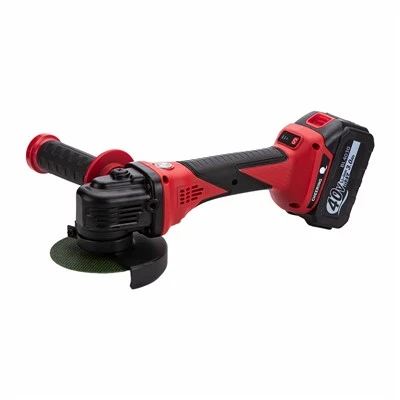
Wait, and if you’re ready to stop guessing and get a grinder that actually works for your projects, feel free to reach out for a custom consultation. We help folks pick the right one for their needs, whether that’s a budget-friendly pick for a home project or a pro-grade workhorse for jobsites. No pressure, just honest advice because we’ve been in this game long enough to know what works and what doesn’t.
Brushless Angle Grinder References:
- Professional Power Tools Association (PPA). "Cordless Angle Grinder Performance Guidelines for Construction Use." 2023.
- Tool Craze. "2024 Guide to Cordless Grinders: What Contractors Actually Recommend." 2024.
- Occupational Safety and Health Administration (OSHA). "Silica Dust Controls for Construction Workers." 2022.
- Makita USA. "Brushless Motor Technology for Cordless Power Tools: Benefits and Applications." 2023.
- DeWalt Industrial Tools. "Consumer vs. Professional Grade Power Tools: Key Differences." 2024.
Zhejiang Cheering Sewing Machine Co., Ltd.
With abundant experience, we are one of the most professional 125mm angle grinder manufacturers and suppliers in China. Please feel free to wholesale advanced 125mm angle grinder for sale here from our factory. We also accept customized orders.
Address: No.69 Heping Road, Lishui, Zhejiang, China
E-mail: gxjlq@126.com
WebSite: https://www.cheering-machinery.com/
