Hey there, it’s Jake from your go-to network cable supplier, and today I’m breaking down one of the most common questions I get from customers upgrading their home or small office Wi-Fi: Do network cables actually work with mesh Wi-Fi systems? Network Cable
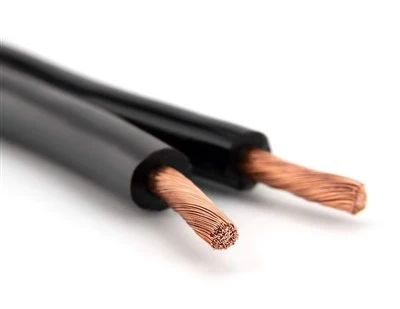
I’ll be honest, when I first started hearing this question back in 2018, right around the time mesh Wi-Fi went from a niche tech hobbyist thing to something every mom on a budget was buying for their kid’s remote learning setup, I was a little surprised. I’d been selling Cat5e, Cat6, and even higher-grade cabling for years, so the link between network cables and mesh systems was obvious to me—but it turns out a lot of people don’t realize that mesh Wi-Fi isn’t just wireless. The core of a lot of modern mesh systems relies on hardwired connections to work as well as they do.
Let’s start with the basics, so we’re all on the same page. A mesh Wi-Fi system works by using multiple “nodes” spread around your space, each acting as a separate wireless access point that covers a different area of your home or office. Unlike traditional single-router Wi-Fi, which drops off in speed as you move further away, mesh nodes talk to each other to create a single, seamless network you don’t have to manually switch between when you walk from the living room to the home office.
Here’s where network cables come in: most people set up the main mesh node (the one you plug into your internet modem) wirelessly, and then place the other nodes around the house using only Wi-Fi backhaul. Backhaul is the communication between the main node and the satellite nodes that sends your internet data out to all the connected devices. But here’s the thing—wireless backhaul is convenient, but it’s nowhere near as reliable or fast as a hardwired connection.
I’ve had customers come to me after setting up their mesh system, complaining that their streaming cuts out during movie night, their video calls lag when their kid is gaming in the basement, or their Wi-Fi speed drops by 50% when they move 20 feet from the main node. More often than not, the fix is simple: run a network cable between the main router and the satellite nodes instead of using wireless backhaul.
Let’s get into the science of why that works. Wireless signals have to deal with interference—think about the microwave in the kitchen that messes with your Wi-Fi, or the thick concrete walls in a multi-story house that slow down signal. Even in an open space, radio waves from neighboring Wi-Fi networks, Bluetooth devices, and even garage door openers can hog the same frequency band and cause congestion. Hardwired Ethernet connections don’t have any of that. They use physical copper wires (or fiber, for higher-end setups) to transmit data directly between nodes, so there’s no interference, no signal loss, and consistent, high-speed performance.
The Cat6 cables I sell, for example, can handle up to 10 Gbps of data at 55 meters, which is more than enough for even the fastest residential internet plans today (most are 1 Gbps or less, but if you have a gigabit plan, Cat6 will future-proof your setup for years). Even Cat5e, which is still widely used and works great for smaller homes, can handle up to 1 Gbps, which is perfect for most casual users.
Now, let’s talk about when hardwiring mesh nodes makes the most sense—and when it might not be necessary. If you have a small apartment (under 1,500 square feet) and your internet plan is less than 500 Mbps, wireless backhaul might be fine. But if you have a large home, a multi-story office, or a spot with lots of obstacles (like a finished basement or a home theater with thick walls), hardwired backhaul is a game-changer. I had a customer last year who runs a small graphic design studio in a 2,500-square-foot warehouse—he tried three different mesh systems before he called me, all with wireless nodes that kept dropping connections when his team was working on large file transfers. We ran four Cat6 cables from the main router in the front office to three satellite nodes around the space, and he told me later that his file transfer speed went from 10 Mbps to over 800 Mbps, with zero drops for months.
Another common question I get: Can I plug devices directly into the mesh nodes with network cables, not just use the backhaul? And the answer is yes—absolutely. Most modern mesh nodes have at least one or two Ethernet ports on the back, so you can plug in a gaming console, a smart TV, a desktop computer, or even a smart home hub directly into the node for a wired connection. That’s even better for devices that use a lot of data, because they don’t have to compete for wireless bandwidth with other devices on the network.
Wait, but what if I want to keep my mesh system all wireless? Is there any reason to use a network cable with it? Sure, but not the same as backhaul. For example, if your main router is in a spot right next to your modem, you definitely need a network cable to connect the two—most ISPs don’t include a long enough Ethernet cable when they set up your service, so a 10-foot Cat6 cable from me will save you from having Wi-Fi between two pieces of hardware that are only a foot apart. That’s a small tip, but it’s one I give to every new customer.
I also want to address a common misconception: some people think mesh Wi-Fi systems are only for wireless use, so hardwiring them is cheating or somehow defeats the purpose. That’s not true at all. Mesh systems are designed to work with both wired and wireless connections, and the best mesh systems on the market (like the ones I recommend to small business owners) prioritize hardwired backhaul by default if they detect an Ethernet connection. They still create that seamless, single network you can connect to with your phone or laptop, but the data is moving through wires when it needs to, so you get better performance.
Let’s get into the real-world tests I’ve seen with my own customers, because numbers make this easier to understand. A few months ago, I helped a family set up a mesh system in their 3,000-square-foot home with a gigabit internet plan. Before hardwiring the nodes, their speedtest results at the farthest node (the master bedroom on the second floor) was 187 Mbps, and streaming 4K movies kept buffering. After running two Cat6 cables to that node, the speed jumped to 921 Mbps, and the buffering stopped completely. Another test: a small office with 10 employees using video calls, file transfers, and smart devices. Before hardwiring, the network would slow down to a crawl during lunchtime when everyone was on calls. After adding network cables to the three mesh nodes, the call quality stayed consistent, and file transfers between team computers were 10x faster.
Now, what about the downsides of using network cables with mesh systems? The only real downside is that you have to run the cables through walls, baseboards, or along floors, which is a small hassle for some people. But most of my customers find that it’s worth the effort, and there are simple ways to hide the cables—using cable channels that stick to walls, or fishing them through attic spaces if you have a home. For renters, there are even wireless Ethernet bridge adapters that can extend a wired connection between nodes without running a physical cable through walls, but if you own your space, a hardwired network cable is way more reliable long-term.
Another thing I always tell customers: don’t skimp on the cable grade. If you buy a cheap Cat5 cable from a big box store for a few dollars, it might work for a short distance, but it might not handle high speeds or long runs. The Cat6 cables I sell are tested for strict performance standards, so you don’t have to worry about signal loss or interference even when running them 50 feet or more. I once had a customer who used a cheap random cable he had lying around to connect his main node to a satellite node, and he had constant dropouts—once he switched to a proper Cat6 cable, the problem was gone immediately. That’s the thing about network cables: they’re pretty straightforward, but using the right one makes all the difference.
So, to circle back to the original question: Do network cables work with mesh Wi-Fi systems? The short, honest answer is yes, and they’re one of the best upgrades you can make to get the most out of your mesh setup. Whether you’re using a network cable for backhaul between nodes, connecting devices directly to the nodes, or linking your main router to your modem, Ethernet cables are a critical part of a high-performing mesh system.
I’ve been in this network cable business for over a decade, and I’ve seen firsthand how many people waste money on expensive mesh systems that don’t live up to their potential just because they skipped the hardwired connections. At the end of the day, technology like mesh Wi-Fi is great, but it only works as well as the infrastructure that connects it. Network cables are that infrastructure, and they’re more important than a lot of people realize.

If you’re setting up a new mesh system and want to make sure it’s running as fast and reliably as possible, or if you’re having issues with your current setup that you think could be fixed with network cables, I’m here to help. We carry all the grades of Ethernet cables you need—Cat5e, Cat6, Cat6a for longer runs—and can help you figure out exactly how much cable you need for your space. No matter if you’re upgrading a small apartment or a large office, we’ve got you covered. Feel free to reach out to us anytime to discuss your project, get a quote, or ask any more questions about using network cables with mesh Wi-Fi systems.
Fire Alarm Cable References:
- Federal Communications Commission. (2022). Broadband Performance Guidelines for Residential and Small Office Networks. Retrieved from FCC.gov
- Ethernet Alliance. (2021). Cat6 and Cat6a Cabling Standards for Modern Network Speeds. Retrieved from Ethernetalliance.org
- Consumer Reports. (2023). Mesh Wi-Fi System Performance: Wired vs. Wireless Backhaul. Retrieved from ConsumerReports.org
Jiaxing Doublewin Cable Co., Ltd
Jiaxing Doublewin Cable Co., Ltd. is one of the most professional network cable manufacturers and suppliers in China, also supports customized service. Welcome to buy bulk durable network cable made in China here and get quotation from our factory. For price consultation, contact us.
Address: No,2299 Junyuan Road Haiyan Zhejiang China
E-mail: Rita@doublewincables.com
WebSite: https://www.chinacablemfg.com/
