What’s the lifespan of DC SPD? As a DC SPD supplier, I get this question all the time—usually from hospital facilities managers, biomedical engineers, or occasionally project managers who just wrapped up a new construction or retrofit. And it’s not a trivial one; misjudging a unit’s lifespan can lead to unexpected downtime in critical care areas, costly emergency replacements, or even compliance headaches when inspections roll around. Let’s break this down like we’re chatting over a coffee, not a power point deck, and get the facts straight. DC SPD

First, let’s make sure we’re on the same page about what we’re talking about. DC SPD stands for Direct Current Surge Protective Device, right? Not the kitchen appliance kind, but the ones that protect DC circuits specifically—think the systems that power MRI machines, patient monitors, infusion pumps, telemetry racks, and even the backup battery banks that keep those systems running during power outages. Regular AC surge protectors won’t cut here; DC circuits have different voltage profiles (most clinical DC systems run between 12V and 48V, though some industrial DC gear hits higher) and unique surge characteristics that demand a device built just for that.
So, how long does one of these actually last? The short answer is: it’s not one-size-fits-all. Way too many folks think “surge protector = 5 years” or “10 years max,” but that’s mostly for consumer-grade units. DC SPDs for healthcare environments are way more robust, so their lifespan hinges on three big factors: build quality, how often they’re used, and how well they’re maintained.
Let’s start with build quality because that’s the biggest one you can control. Not all DC SPDs are created equal. The cheap ones you see online for $20 or $30? They’re usually made with disposable components—like metal oxide varistors (MOVs) that wear out fast, or flimsy plastic housings that can crack from temperature swings. The ones we supply, for example, use thermally stable MOVs rated for thousands of surge events, a grounded metal enclosure that handles the 24/7 temperature shifts in server rooms or utility closets, and redundant protection layers so if one component wears, the next kicks in. For these, the rated operational lifespan (that’s the number the manufacturer gives, based on lab testing) is usually 10 to 15 years. But that’s just the baseline in perfect conditions.
Next, usage and exposure to surges. Surges are the number one killer of DC SPDs, period. A surge isn’t just a random power blip—every time a big piece of equipment turns off or on, or a lightning strike hits the building’s main power line, that sends a spike down the circuit. How often does that happen? If your DC circuit is powering a quiet telemetry station in a wing where no new equipment is added, you might get a surge a week, maybe a month. But if it’s in an ED trauma bay, where they’re hooking up and unhooking monitors every 10 minutes? Those surges add up fast. Every time a surge passes through the SPD, it erodes the internal components a little. We’ve seen units in high-traffic EDs die in 6 years, while identical models in underused admin areas still run at 90% capacity at 12 years. That’s a huge difference, and it’s all about how much action the SPD sees.
Wait, also, environmental factors. Hospitals and DC industrial spaces aren’t temperature-controlled caves. Utility closets can hit 110°F in the summer, and drop to 40°F in the winter. Humidity too—laundries, surgical suites, even basement utility spaces have damp or humid air that can corrode internal connections. A good DC SPD is sealed against that, but even the best seal wears over time. If your unit is mounted in a dusty, unventilated closet vs. a temperature-controlled equipment room, you’re looking at a 20-30% shorter lifespan, easy. That’s a big point people miss when they buy a cheap unit to save money—mounting location kills performance faster than anything.
Now, let’s talk about how to tell if your DC SPD is nearing the end, because the rated lifespan is just a guideline, not a expiration date. Most quality DC SPDs have an indicator light—green means it’s good, yellow means it’s nearing end of life, red means it’s dead. But here’s the catch: those lights can fail too. So you shouldn’t rely solely on that. We recommend doing a quick visual check every 6 months: look for cracks in the enclosure, corrosion on the terminals, or if the light is stuck on red when you know the power is on. And every 2 years, have a biomed tech or electrician do a basic continuity test on the SPD—checking if it’s still conducting normal power properly, not just diverting surges.
Another thing: compliance checks. The Joint Commission (that’s the big hospital accreditation body in the US) requires that all critical electrical components, including surge protectors, are checked regularly. If your DC SPD is past its rated lifespan, even if it looks fine, you might get flagged during an inspection. That’s not a risk you want to take—one faulty surge protector could lead to a system outage, which can cost a hospital thousands per hour in lost revenue, or even worse, put patient care at risk.
Wait, let’s clear up a common myth. A lot of people think once the SPD is “dead,” it just stops working entirely, so their equipment is now unprotected. That’s wrong. Most cheap units will short circuit when they die, which can actually trip your breaker, which is annoying. Good quality DC SPDs will often stay in “bypass” mode when they fail, meaning power keeps going to your equipment, but there’s no surge protection anymore. That’s a way bigger risk—you don’t notice it’s dead until a surge fries your monitor. We’ve had clients come to us after a $10k equipment replacement, and they told us their SPD was 8 years old, and they never knew it had stopped protecting. Ouch.
So, what’s the takeaway for you, as someone managing a DC circuit? If you’re installing new, go for a quality unit—spend a little more upfront, save thousands in replacements and equipment damage later. Plan to inspect the indicator light monthly, do visual checks every 6 months, and formal testing every 2 years. And don’t just go by the rated lifespan—if your unit is in a high-surge, bad environment, start planning for a replacement around 7 years, not 10. If it’s in a low-use, temperature-controlled space, you can push it to 12 or even 15, but keep that testing schedule.
And hey, if you’re not sure about your current setup? Maybe you’re wondering if your DC SPD is working right, or if you should upgrade, or when’s the best time to replace it—we’re here to help. We’ve worked with hospitals of all sizes, from small clinics to big academic medical centers, and we can walk you through checking your units, answering any questions, or putting together a replacement plan that fits your budget and your compliance needs.
Wait, let’s make sure I didn’t miss anything. Is there any other factor that affects lifespan? Oh, yeah—surge capacity. If an SPD is rated for 10,000 amps, but you’re getting surges that hit 15,000 amps every week, that’s way more stress than it was designed for. So even a top-tier unit will wear out faster if it’s undersized for the surges in your circuit. That’s why a lot of people get it wrong—they buy an SPD that fits their voltage, but not their surge load, and wonder why it dies so fast. When we sell units, we always ask about the circuit’s typical surge levels to make sure we get the right size, not just the right voltage. That’s a difference you won’t get from a random online purchase.
Another myth: replacing all your SPDs at once. No way. If you have one unit in an ED that’s 6 years old, and another in a storage closet that’s 12 years old, you don’t need to replace both. Just test the ED one, plan to replace it soon, and keep an eye on the storage one. Coordinating replacements only when they’re actually due saves a ton of money and downtime—way better than a wholesale replacement every 10 years.
Look, I get it, hospitals have a million things on their plate, and electrical components are low on the priority list until something breaks. But a DC SPD is the first line of defense for your critical patient care equipment. Skip out on quality, skip out on maintenance, and you’re rolling the dice. We’ve seen the messes from that: a hospital in Chicago had a surge in their ICU that fried 7 monitors, because their 8-year-old SPD had died without anyone noticing. That cost them $50k in equipment, plus a couple of hours of delayed patient care during a peak time. That’s a avoidable, right?
So to wrap this up: the lifespan of a DC SPD isn’t a magic number. It’s dependent on build quality, usage, environment, and sizing. A good quality unit, installed correctly, in low-use, ideal conditions, can last 12-15 years. A cheap unit, in a high-traffic, harsh environment, might only last 5. The key is to not just rely on the manufacturer’s rating, but to have a regular checkup schedule, and work with a supplier who knows how to match the right unit to your needs.
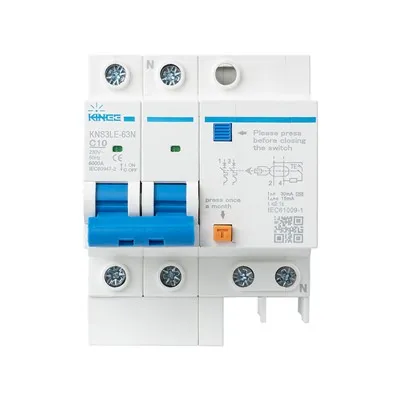
If you’re ready to stop guessing about your DC SPDs, or just want to make sure your current setup is set up for long-term performance, reach out to us. We can do a quick assessment, answer any questions, and help you build a plan that keeps your equipment protected without breaking the bank. We’re here to make this stuff less confusing, so you can focus on what matters most: patient care.
Crimping Tool References
- National Electrical Manufacturers Association (NEMA). Standard for Surge Protective Devices for Low-Voltage AC and DC Power Circuits, 2021.
- Underwriters Laboratories (UL). UL 1449, Standard for Safety for Surge Protective Devices, 4th Edition, 2022.
- Joint Commission. Electrical Equipment Maintenance Standards for Critical Access Hospitals, 2023.
- International Electrotechnical Commission (IEC). IEC 61643-21, Low-Voltage Surge Protective Devices – Part 21: DC Power Systems, 2020.
Wenzhou Kinee Electrical Co., Ltd.
We are one of the most professional dc spd manufacturers and suppliers in China, featured by quality products and good price. Please rest assured to buy advanced dc spd made in China here from our factory. We also accept customized orders.
Address: Unit 1, Building 31, Wenzhou Wenbo Science and Technology Industrial Park, No. 706 Yanyun Road, Lingkun Street, Oujiangkou Industrial Cluster Area, Wenzhou, Zhejiang Province
E-mail: sandyma@kinee.net
WebSite: https://www.kinee.net/
